Indiana water heater referral service
Water Heater Leak Repair in Indiana
Water around the tank, a dripping relief valve or a tankless unit that won’t stop leaking? One free call connects you with a local water heater pro who can find the leak, stop it and get your hot water back.
- Free to call
- Tank & tankless
- Gas & electric
- Statewide referrals
Indy Water Heater Expert is a free referral service. Calls are answered by or forwarded to independent local providers.
 Local providers
First steps
What should you do when your water heater is leaking?
Turn off the power or gas to the heater, close the cold-water shutoff above the tank, and keep everyone away from standing water near outlets. Then work out where the water is coming from.
Leaks from the fittings on top, the relief valve on the side or the drain valve near the bottom can usually be repaired. A leak from the tank body itself almost always means the heater must be replaced. Much of Indiana has hard water, which speeds up sediment and corrosion inside tanks, so leaks become more likely as a heater ages.
If water is spreading right now, our emergency water heater leak repair guide walks through every step in order. If the issue is a drip at a valve, start with valve and component repair.
Smell gas? Leave the house and call your gas utility or 911 from outside. Don’t use light switches or try to relight the pilot.
Pro tip: Wipe everything dry, then lay paper towels around the base. The first spot to get wet shows where the leak starts.
Indiana coverage
Taking calls| Where you see water | Likely source |
|---|---|
| Top of the heater | Inlet or outlet fittings, connectors or the anode port |
| Pipe running down the side | Temperature and pressure relief valve |
| Near the bottom spigot | Drain valve |
| Under a tankless unit | Isolation valves, seals or the heat exchanger |
| Under the tank, no clear source | Corroded tank, usually needs replacement |
Services
Water heater services across Indiana
From an active leak to a yearly flush, these are the problems local providers handle every day.
Emergency Water Heater Leak Repair
Water spreading across the floor needs a fast, orderly response: stop the flow, make the heater safe and find the failure before it reaches walls and flooring.
Learn more
No Hot Water Repair
Cold showers and lukewarm taps usually trace to a pilot, element, thermostat or dip tube.
Learn more
Tankless Water Heater Leak Repair
Drips from wall-mounted units, scaled heat exchangers and error codes.
Learn more
Standard Tank Water Heater Repair
Rusty water, rumbling, worn anode rods and seeps from the base.
Learn more
Water Heater Replacement & Installation
Right-sized tank, tankless or heat pump units installed with code-ready parts.
Learn more
Water Heater Valve & Component Repair
Dripping relief valves, leaky drain valves and corroded fittings.
Learn more
Gas Water Heater Repair & Service
Pilots that won't stay lit, weak burners and venting problems.
Learn more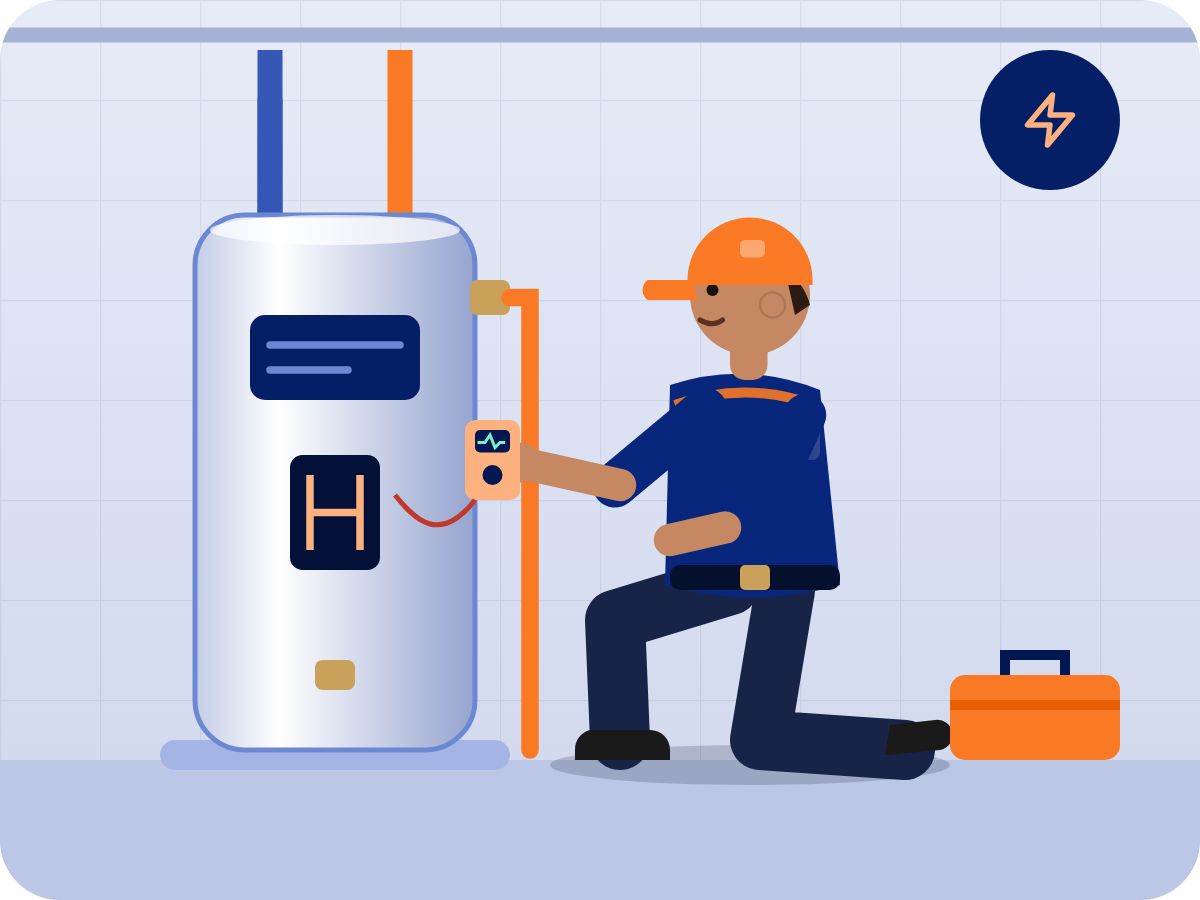
Electric Water Heater Troubleshooting
Failed elements, thermostats and tripping resets.
Learn more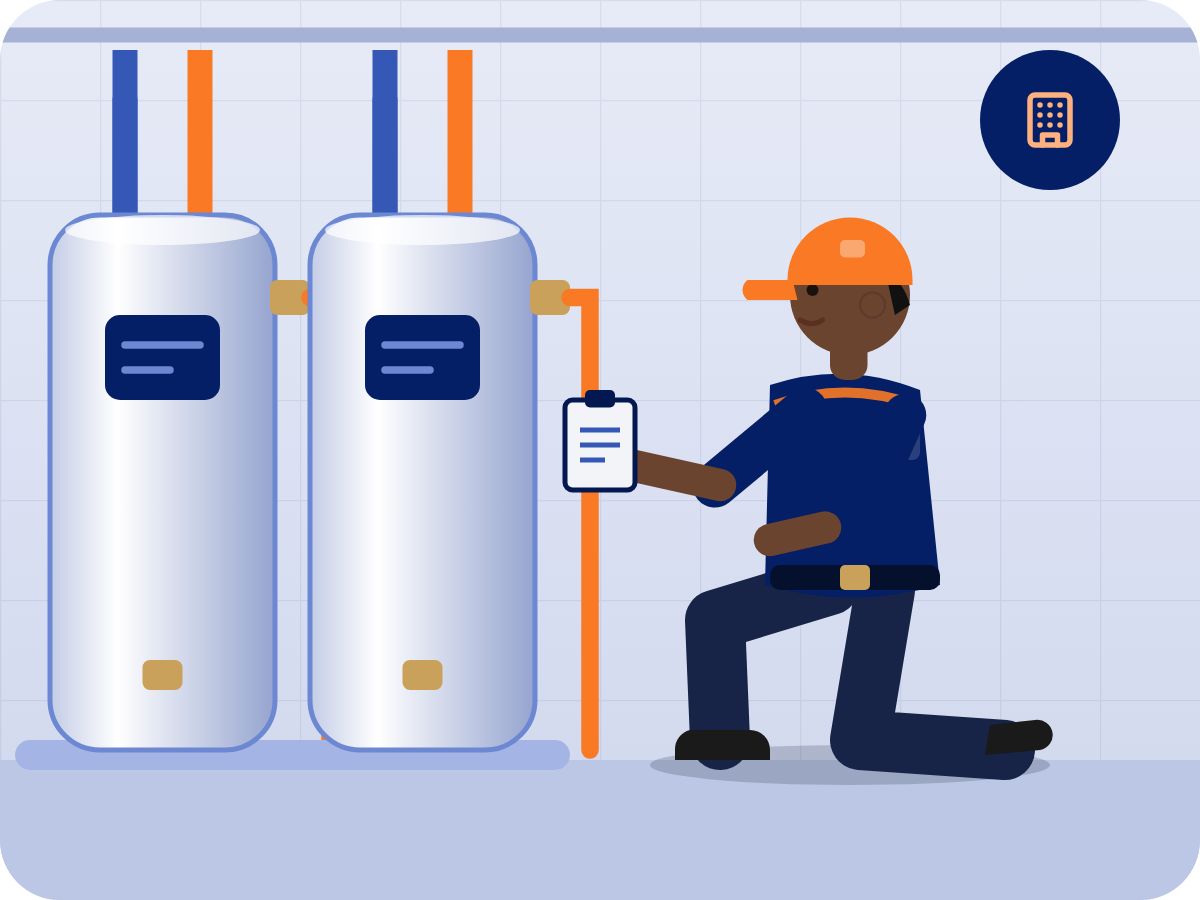
Commercial Water Heater Leak Repair
High-demand systems for restaurants, salons, offices and apartments.
Learn more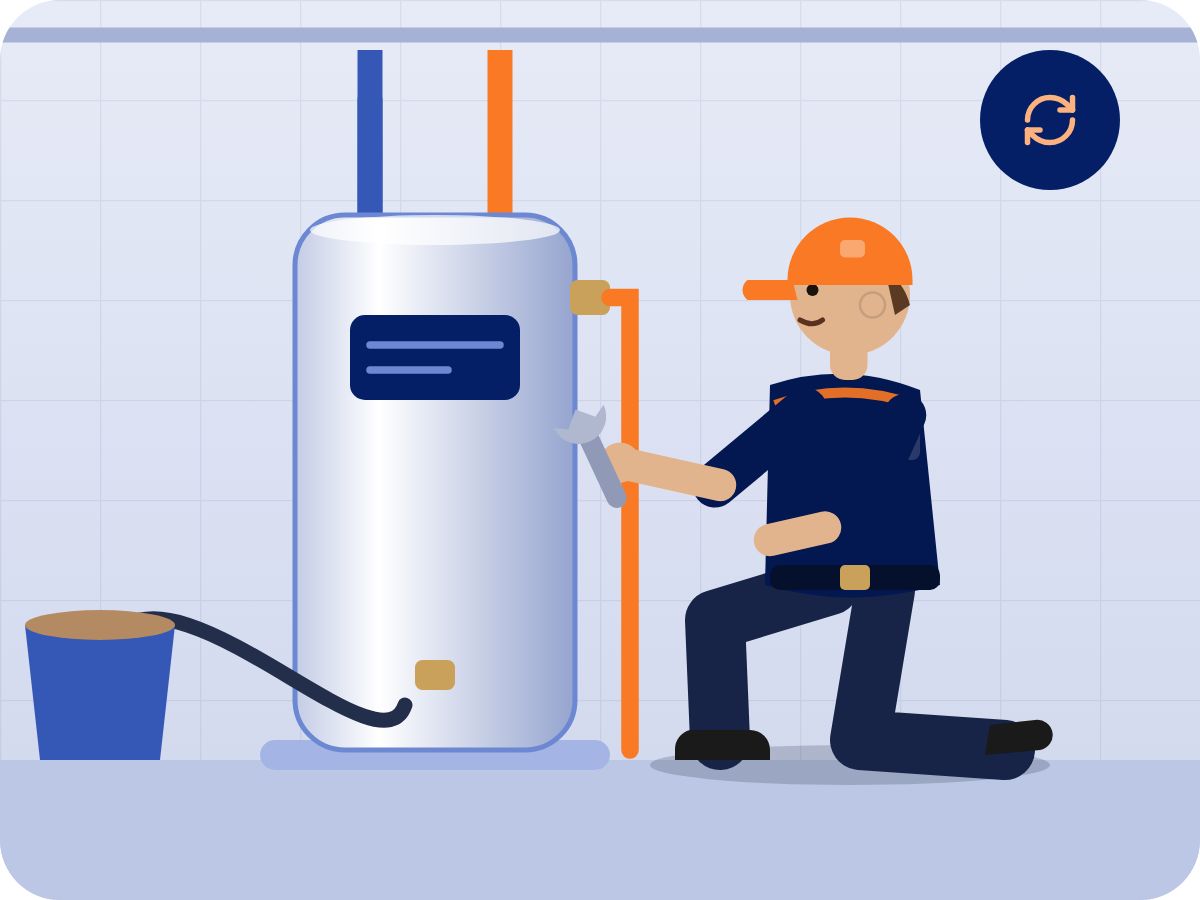
Water Heater Flushing & Maintenance
Flushing, descaling and anode checks for Indiana's hard water.
Learn moreSymptom checker
What is your water heater doing?
Choose the symptom that matches. You will see the likely cause, how urgent it is and what to do before help arrives.
Water pooling under the tank
Relief valve dripping
No hot water
Rumbling or popping
Rusty hot water
Tankless unit dripping or erroring
In-depth guide
Why water heaters leak, and what happens next
The most common causes
Most leaks are the end of a slow process rather than a sudden accident. Inside a tank, a sacrificial anode rod corrodes so the steel does not. Once it is used up, rust starts working on the tank from the inside. Hard water speeds this along by leaving sediment that overheats the tank floor. Outside the tank, relief valves, drain valves and the fittings where copper meets steel all wear out on their own schedules.
Pressure plays a big part too. Many Indiana homes have a check valve or pressure regulator on the main line, which creates a closed system. Without a thermal expansion tank, pressure spikes every time the heater runs, forcing the relief valve open and stressing every joint. Tankless units have their own pattern: scale coats the heat exchanger, temperatures climb and seals give way. Our tankless leak repair page explains that process in detail.
How the source is found
A technician starts by making the heater safe, then dries the area and traces the water. Top fittings, the relief valve, the drain valve and the tank body each leave different clues. Rust trails, mineral crust and where water collects first all point to the source. On gas units, the burner compartment is checked for water dripping onto the flame; on electric units, the element ports are checked for seepage. Testing household water pressure and checking for an expansion tank is part of a thorough visit.
Repair or replace?
If the leak is at a valve or fitting and the tank is sound, a repair is usually the right call. If water is coming from the tank itself, or the heater is old, rusty and has needed several repairs, replacement makes more sense. A good provider explains both options honestly. Our guides to tank water heater repair and replacement and installation cover how that decision is made.
After the repair
Once water is back on, the heater is refilled before power or gas is restored, then tested under full pressure and brought back to temperature. This is also the best moment to fix whatever caused the problem: adding an expansion tank, lowering an overly high temperature setting or putting the heater on a flushing and maintenance schedule so sediment never builds up to the same level again.
Preventing the next leak
A few simple habits make a big difference in Indiana homes. Keep the thermostat at a sensible setting, have the relief valve tested once a year, and check the base of the heater and the drain pan whenever you change a furnace filter. Know where your cold-water shutoff and main water shutoff are, and make sure both still turn. If your heater is more than ten years old, ask a provider to look at the anode rod and the condition of the tank before trouble starts. These small checks take minutes and catch most problems while they are still inexpensive to fix.
Inside a water heater
Hot water rises to the top while cold water enters through the dip tube. Sediment settles at the bottom, the anode rod protects the steel, and the relief valve opens if pressure gets too high.
How it works
From your first call to a fixed leak
Calling is free. You are connected with an independent local provider, and you decide whether to book.
Call the number
Your call reaches a water heater provider who serves your part of Indiana.
Describe the problem
Where the water is, the type of heater and roughly how old it is.
Get a visit scheduled
The provider explains the next steps and agrees a time that works for you.
Diagnosis, then repair
You get a clear quote before any work begins, then the repair is completed and tested.
Cost of waiting
Why a small leak shouldn’t wait
A slow drip is easy to put off. The trouble is that water heater leaks rarely stay small. A seep from a corroded tank can turn into a steady flow without warning, and a relief valve that drips today may be signalling pressure problems that stress every fitting in the system.
Water also travels. In basements it runs under wall plates and into carpet pad; in closets it soaks cabinets and baseboards; in garages it finds its way to stored boxes and drywall. Drying and repairing those materials often costs more than the water heater repair itself. On gas heaters, water dripping onto the burner can damage controls, and on electric units moisture near wiring is a safety concern.
Calling early gives you options. You can repair a valve while the tank is still sound, or plan a replacement on your schedule instead of in an emergency.
Cost factors
What affects the price of a repair?
| Factor | Why it matters |
|---|---|
| Leak source | A fitting or valve is a small repair; a failed tank means replacement. |
| Tank or tankless | Tankless heat exchangers and controls need different parts and skills. |
| Gas or electric | Burners, venting and gas valves versus elements and thermostats. |
| Age and condition | Older, corroded units may not be worth repairing. |
| Access | Attics, crawl spaces and tight closets take longer. |
| Timing | Many providers charge more for nights and weekends. |
| Code updates | Replacements may need a drain pan, expansion tank or venting changes. |
Service areas
Water heater help across Indiana
We focus on the Indianapolis metro, with local pages for Indianapolis, Carmel, Fishers, Lawrence and Noblesville, and connect callers from other Indiana communities whenever a provider is available.
Indianapolis, IN
Indiana's capital and largest city, with everything from century-old basement gas tanks in Irvington to electric units in downtown condos. Our office address is on the northeast side.
Indianapolis water heater help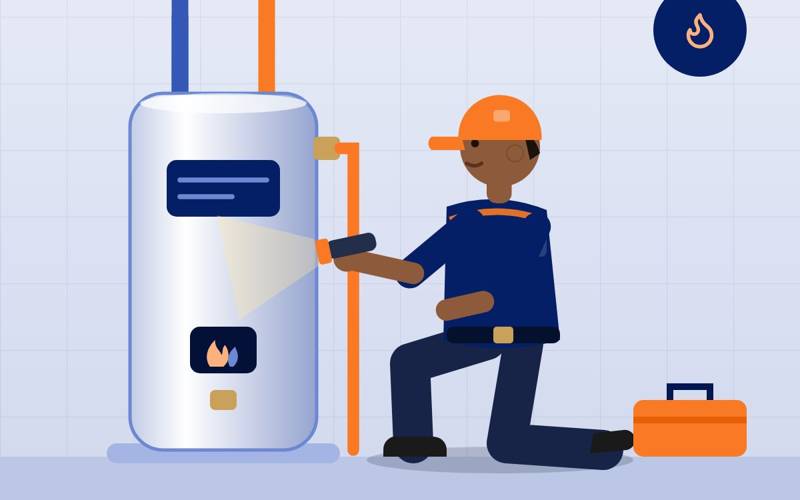
Carmel, IN
Larger homes in Hamilton County with high hot-water demand, finished basements and plenty of tankless and dual-heater setups.
Carmel water heater help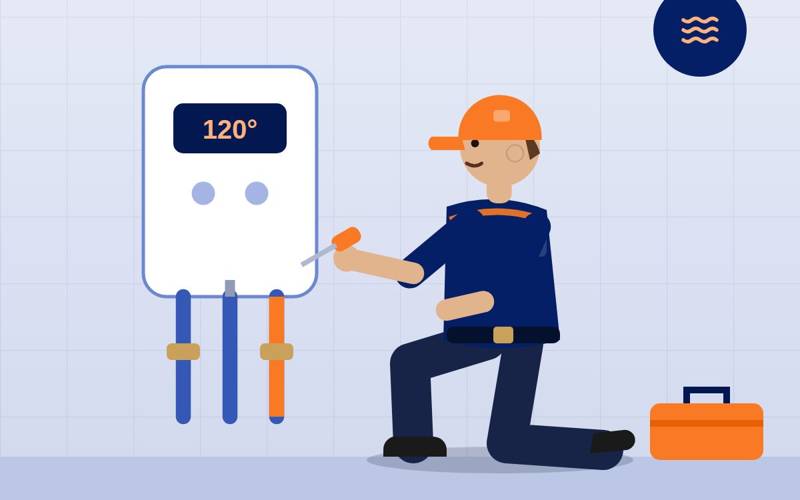
Fishers, IN
Fast-growing neighborhoods where many original builder-grade heaters are now reaching the age when leaks begin.
Fishers water heater help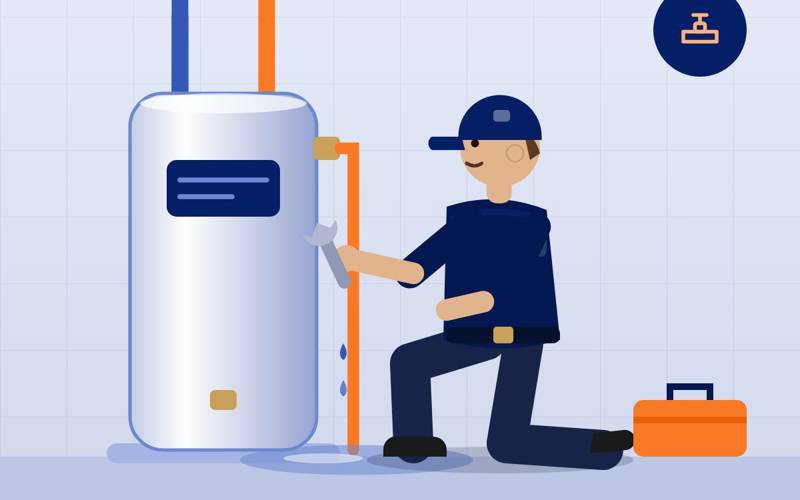
Lawrence, IN
Northeast Marion County homes, often with water heaters in utility closets or garages right beside living space.
Lawrence water heater help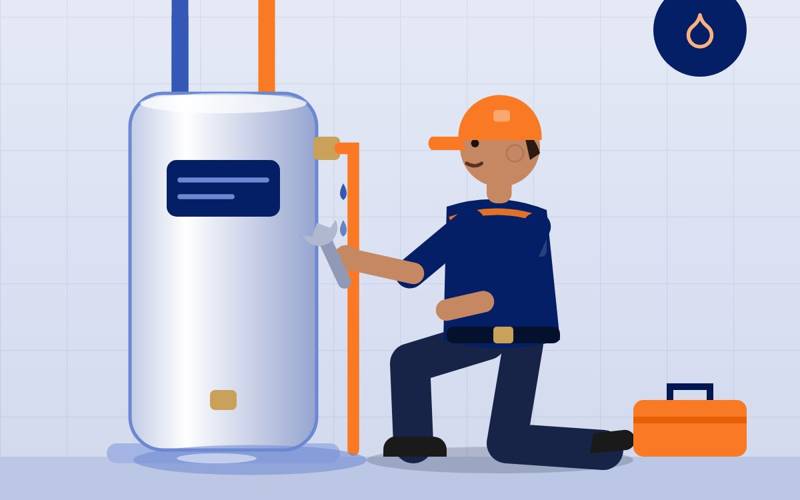
Noblesville, IN
The Hamilton County seat, mixing historic homes near the courthouse square with newer subdivisions.
Noblesville water heater help
Statewide
Calls from other Indiana communities are connected with independent providers who serve those areas whenever one is available.
Call 123457890How referrals work
A free call, a local provider, your decision
Indy Water Heater Expert is a referral service, not a plumbing company. When you call, you are connected with an independent provider who works on water heaters in your area. That provider explains what they can do, when they can come and what it will cost. There is no charge for the call and no obligation to book.
Because providers are independent, they are responsible for their own work, licensing, insurance and pricing. We encourage every caller to ask for credentials, get the price in writing before work starts and request any warranty in writing. Learn more about how we work, or contact us with questions about the service itself.
What to have ready when you call
- Your city or ZIP code in Indiana
- Gas or electric, tank or tankless
- The heater’s approximate age (on the rating label)
- Where the water is coming from, or what the heater is doing
- Whether water is near outlets or finished floors
Having these details ready helps the provider decide how quickly to come and which parts to bring. If the heater has gas pilot problems or electric heating issues rather than a leak, mention that too. Businesses can also see our commercial water heater page, and anyone with cold showers can start with no hot water repair.
FAQ
Water heater leak questions from Indiana homeowners
Quick answers to the questions we hear most. Still unsure? A free call gets you a straight answer from a local provider.
Call 123457890Do you serve all of Indiana?
Calls are connected with independent providers who serve communities across Indiana. Coverage is strongest in the Indianapolis metro, including Indianapolis, Carmel, Fishers, Lawrence and Noblesville.
Is a leaking water heater an emergency?
It can be. Spreading water, water near outlets or a gas smell need action right away. Close the cold-water supply, turn off the power or gas and call. A slow drip at a fitting is less urgent but should be fixed soon.
Can a leaking water heater be repaired?
Often, yes. Leaks from fittings, the drain valve or the relief valve are usually repairable. A leak from the tank body means the heater needs replacing.
How much does water heater leak repair cost?
It depends on the leak source, heater type, access and timing. Providers quote before work begins, so you know the price up front.
Why is my relief valve dripping?
The temperature and pressure relief valve opens when pressure or temperature is too high, or when the valve is worn. Thermal expansion in a closed system is a common cause.
How long do water heaters last in Indiana?
Many tank heaters last around 8 to 12 years. Indiana’s hard water can shorten that without regular flushing and anode rod checks.
Do you work on tankless water heaters?
Yes. Calls connect you with providers who repair leaks, descale heat exchangers and diagnose error codes on tankless units.
Is calling free?
Yes. Calling is free, and you decide whether to book after you talk with the provider.
Do you perform the repairs yourselves?
No. Indy Water Heater Expert is a referral service. Repairs are performed by independent local providers who set their own prices and are responsible for their work.
What should I have ready when I call?
Your location, the type of heater (gas, electric, tank or tankless), its approximate age and where the water is coming from.
Leaking right now?
Talk to a local water heater pro today
Free to call. Serving Indianapolis, Carmel, Fishers, Lawrence, Noblesville and communities across Indiana.