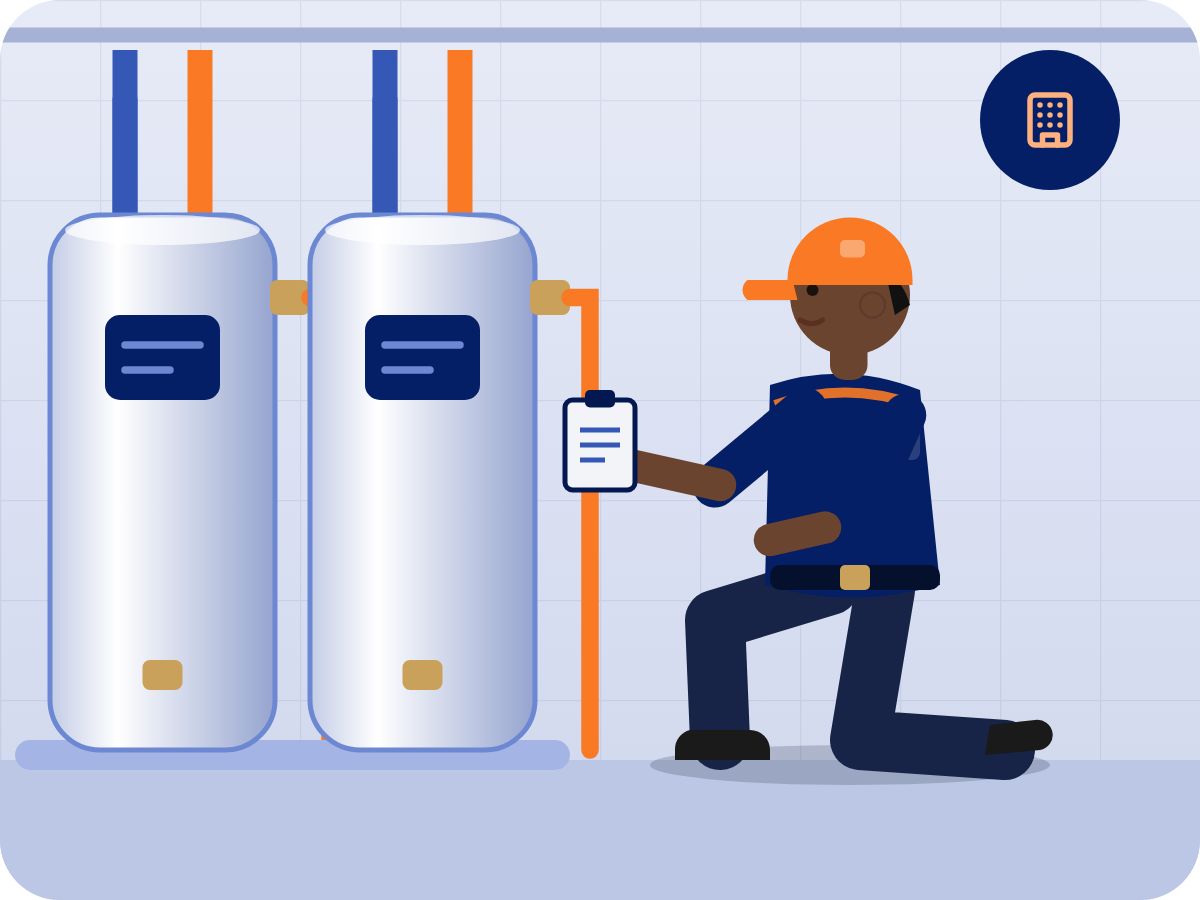
What is commercial water heater leak repair?
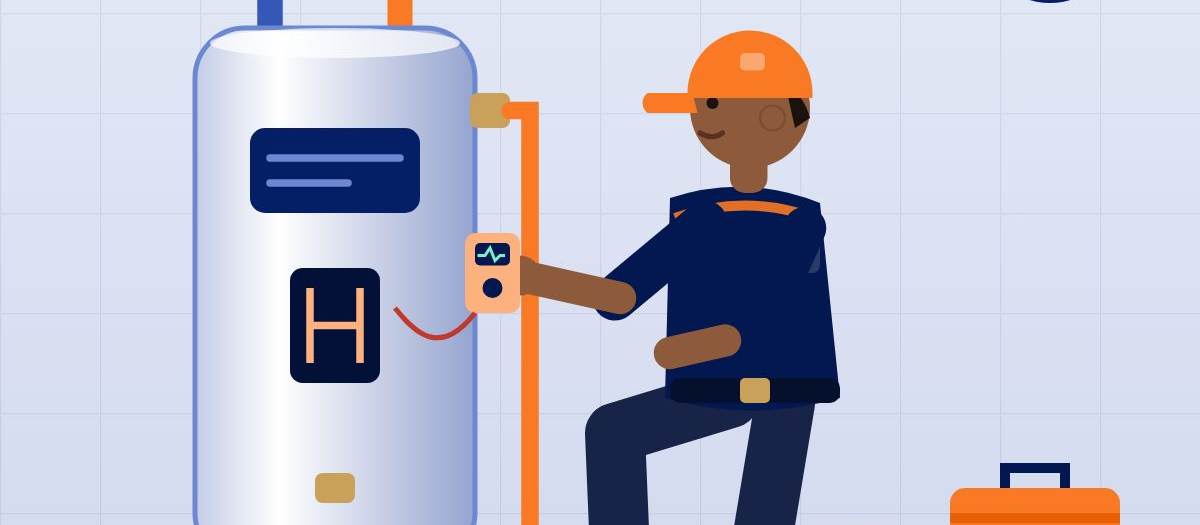
Commercial water heaters supply restaurants, salons, gyms, laundromats, offices, churches, schools and apartment buildings. They are larger, recover faster and run far more hours than a home unit. Some are big single tanks, others are banks of tankless units or a boiler feeding a storage tank.
When one of these systems leaks, the stakes are different. A restaurant cannot wash dishes or meet health requirements without hot water. A salon cannot take clients. An apartment building fields complaints from every unit at once. Commercial leak repair is about stopping the leak, protecting the building and restoring hot water with the least possible downtime, while keeping staff and customers safe.
Across Indiana, local providers handle everything from a single large tank in a small shop to multi-heater systems in larger buildings. The approach scales with the building, but the priorities stay the same: safety first, then containing water damage, then getting hot water flowing again as quickly as the repair allows.
Common commercial water heating systems
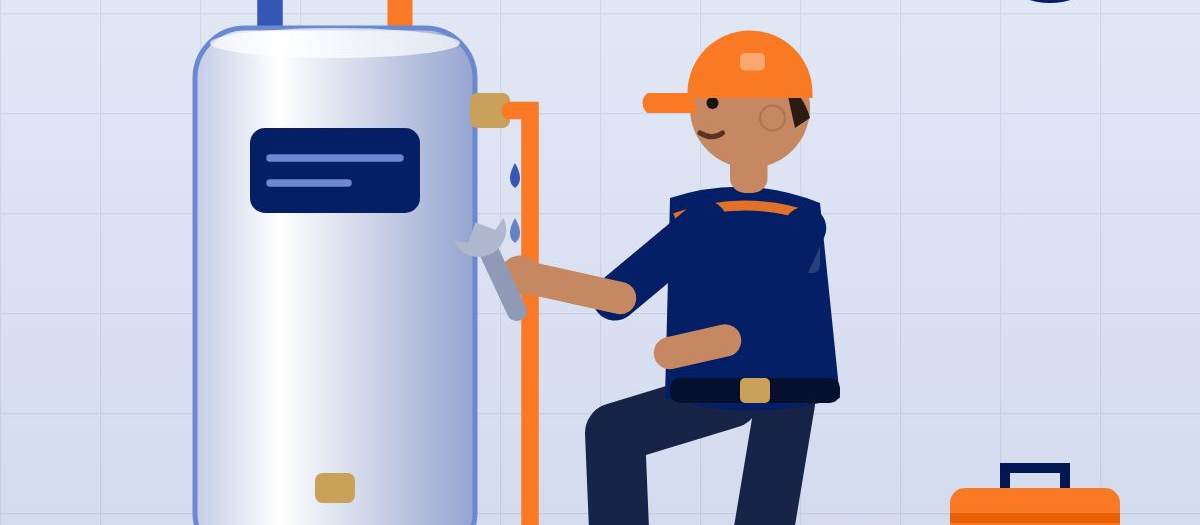
High-capacity tank heaters
Large gas or electric tanks with high-input burners or multiple elements. They leak in the same places as home tanks, including fittings, valves and the tank body, but carry more water and more pressure.
Multiple tankless units
Several tankless heaters linked together share the load. A leak in one unit can often be isolated so the rest keep running while it is repaired. For how individual units leak, see our page on tankless water heater leak repair.
Boiler and storage tank systems
Some buildings heat water with a boiler and store it in a separate tank, with circulation pumps keeping it moving. Leaks can start at the tank, the heat exchanger, pumps or piping.
Recirculation loops
Many commercial buildings keep hot water moving through a loop so it is instant at every fixture. Pumps, check valves and long pipe runs add more potential leak points.
Hot water, health codes and safety

For many businesses, hot water is not just a convenience. Food service operations rely on it for handwashing and dishwashing, and local health departments set hot-water requirements that inspectors check. Salons, gyms and care facilities have their own expectations for consistent, safe water temperatures.
That creates two pressures at once. Water has to be hot enough at the point of use, yet not so hot at sinks and showers that it creates a scald risk. Many commercial systems handle this with a high storage temperature and mixing valves that temper water before it reaches fixtures. When a mixing valve fails, staff may notice water that is suddenly too hot or too cold even though the heater is fine.
If your business is subject to inspections, keep service records handy, and ask your provider to note temperatures and any safety devices checked during each visit. Your local health department can confirm the exact requirements for your type of business.
8 signs a commercial water heater needs attention
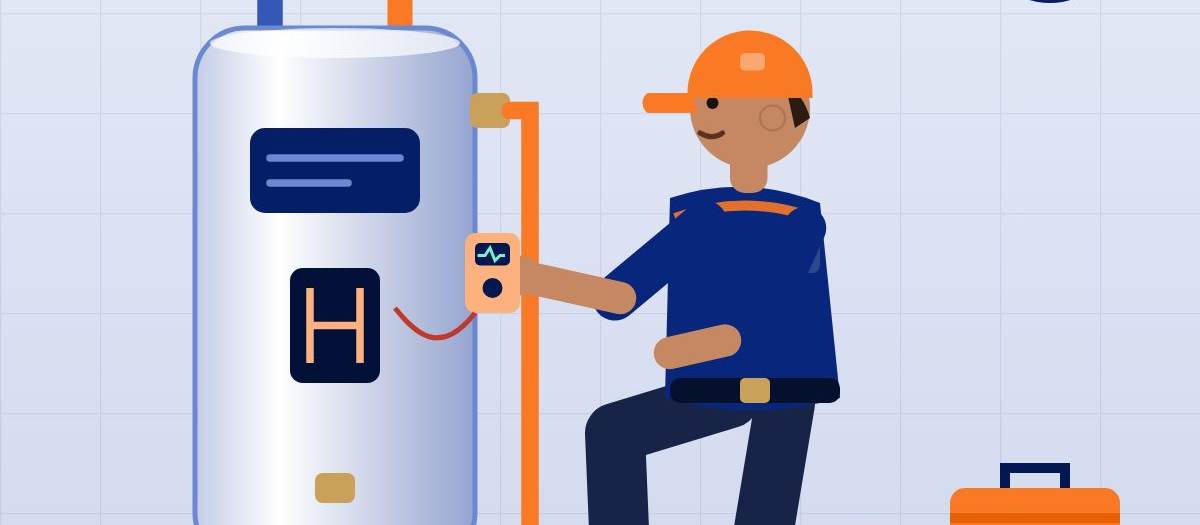
Catching these early avoids a closed-for-the-day emergency.
- Water in the mechanical room. Even a small puddle near large equipment deserves a fast look.
- Relief valves discharging. Often a pressure, temperature or expansion issue.
- Hot water running out at peak times. Capacity may no longer match demand, or a unit has failed.
- Temperature swings at fixtures. A failing control, mixing valve or recirculation issue.
- Rust-colored water from hot taps. Corrosion inside the tank or piping.
- Noisy operation. Sediment or scale in high-use equipment.
- Error codes on tankless units. Flow, ignition or scale faults.
- Frequent breaker or burner lockouts. An electrical or combustion fault needs diagnosis.
Why commercial water heaters leak
- Heavy use. More cycles per day means faster wear on valves, seals and tanks.
- Hard water. High volumes of Indiana’s hard water deposit scale and sediment quickly.
- High temperatures. Kitchens and laundries often store water hotter, which speeds up corrosion.
- Pressure and expansion. Large systems need properly sized expansion tanks and relief valves.
- Deferred maintenance. Busy businesses often skip flushing until a failure forces the issue. A schedule like the one on our flushing and maintenance page prevents most of that.
What staff should do when a leak appears

A short plan posted in the mechanical room saves time and money.
- Close the cold supply to the leaking unit. Isolate just that heater if the system allows it.
- Shut off its gas or power. At the gas valve or the dedicated breaker.
- Keep people away from wet electrical equipment. Mechanical rooms often have panels near water heaters.
- Protect stock and equipment. Move items off the floor and away from the water.
- Call with the details. Unit type, size, error codes and where the water is coming from.
Smell gas or see scorching? Evacuate the area and call the gas utility or 911 from outside.
Label your shutoffs. Clear tags on each heater's water, gas and power shutoffs help any staff member act quickly.
What a commercial repair visit involves
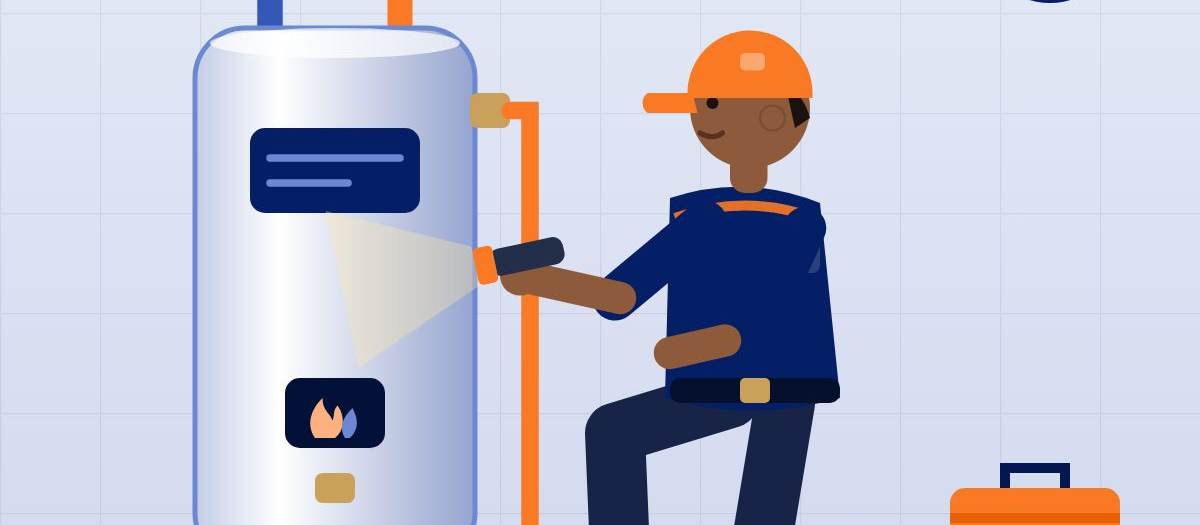
Visits are planned around keeping the business running.
- Assess and isolate. The failed unit is isolated so others can keep supplying hot water where possible.
- Diagnose. The leak or fault is traced on the tank, heat exchanger, valves, pumps or piping.
- Options and timing. You get repair or replacement options and a schedule that fits business hours.
- Repair. Parts are replaced; temporary hot water may be arranged for longer jobs.
- Test and document. The system is tested under load, and the work is documented for your records.
What affects the cost of commercial water heater repair?
| Factor | How it affects the price |
|---|---|
| System size and type | Large tanks, boilers and multi-unit tankless setups use costlier parts. |
| Downtime requirements | After-hours work to avoid closing usually costs more. |
| Access | Rooftop, ceiling or cramped mechanical rooms add labor. |
| Code and inspection | Commercial work may require permits and inspections. |
| Parts availability | Commercial components are sometimes special-order. |
Planning ahead: maintenance and replacement
The most expensive commercial water heater failure is the one that happens during your busiest hours. A maintenance plan that includes flushing, relief valve testing, anode checks and scale control spreads the cost out and keeps surprises rare.
When equipment nears the end of its life, replacing it on your schedule beats replacing it in an emergency. Sizing a commercial system depends on peak demand, recovery rate and the temperatures you need. Our replacement and installation page explains the basics, and a commercial provider can size the system to your building.
If you manage several properties across Indiana, keeping records of each heater’s age, model and service history makes planning much easier.
Commercial water heater questions
Do you handle water heaters for restaurants and salons?
Yes. Calls connect you with local providers who service commercial water heaters, including kitchens, salons, gyms and offices.
Can repairs be scheduled outside business hours?
Many commercial providers offer after-hours scheduling. Ask when you call, and expect it may affect the price.
Can one unit be repaired while the others keep running?
In multi-heater systems, a leaking unit can often be isolated so the rest keep supplying hot water.
How often should a commercial water heater be maintained?
High-use systems in hard-water areas often benefit from service at least once or twice a year. Your provider can recommend a schedule.
Do commercial water heater repairs need permits?
Some work, especially replacements, may require permits and inspections. Your provider should know the local requirements.
Is it better to repair or replace an old commercial water heater?
It depends on the age, the failure and how critical the heater is to your business. If a unit is near the end of its life, planned replacement often costs less than repeated emergency repairs and lost business.
What information should I have ready when I call?
The heater's brand, model, size, fuel type, age, any error codes and where the water is coming from.