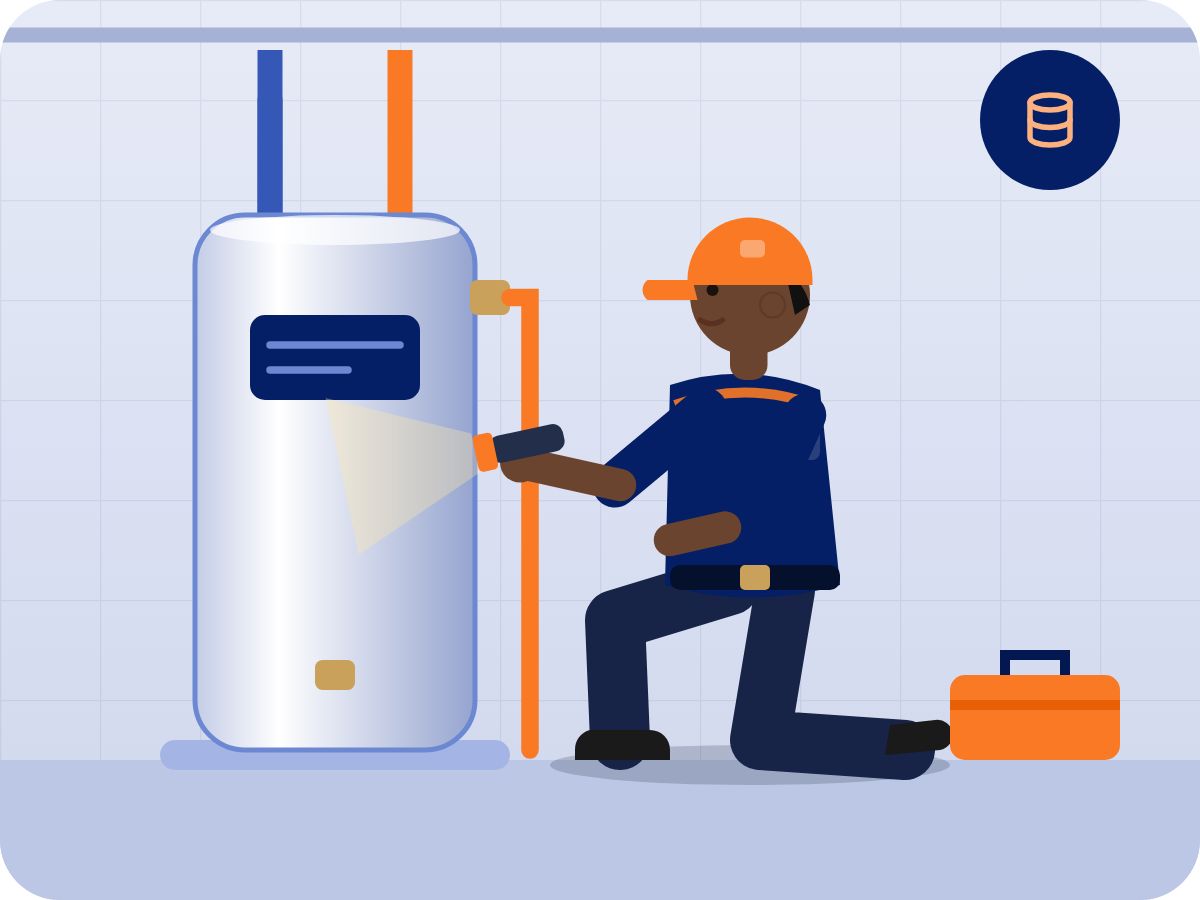
What does standard tank water heater repair cover?

A standard tank water heater stores heated water in an insulated steel tank, usually somewhere between 30 and 80 gallons in a home. It looks simple from the outside, but several parts inside decide how long it lasts and how well it works.
Tank repair focuses on those parts: the anode rod that protects the steel, the dip tube that carries cold water to the bottom, the thermostat and heat source, and the valves on the outside. Replacing the right part at the right time can add years to a tank and keep rusty water, odd smells and strange noises away.
What tank repair cannot do is fix the tank body itself. Once the inner tank leaks, it has to be replaced. The aim of good repair work is to make sure that day comes as late as possible.
Which parts of a tank heater can be repaired?

The tank and its glass lining
The steel tank is coated inside with a glass-like lining. Small gaps in that coating are normal, which is where the anode rod comes in. The tank and lining themselves are not repairable.
The anode rod
This metal rod hangs from the top of the tank and corrodes on purpose so the steel does not. Once it is worn down to its core wire, the tank starts to rust. Replacing it is one of the most cost-effective repairs on any tank heater. Magnesium, aluminum and powered rods are all options, and the right one depends on your water.
The dip tube
A plastic tube carries incoming cold water to the bottom of the tank. When it cracks or breaks apart, cold water mixes with the hot at the top, and you may find small white plastic pieces in faucet screens. A new dip tube is an inexpensive fix.
Thermostats and the heat source
Gas tanks use a gas control and burner; electric tanks use elements and thermostats. These are covered in detail on the gas and electric repair pages.
Valves on the outside
The relief valve and drain valve wear out on their own schedule. See valve and component repair for those.
8 signs your tank needs attention

Tank problems tend to announce themselves well before a leak. These are the early warnings.
- Rusty or brown hot water. Often a worn anode rod or corrosion starting inside the tank.
- A rotten-egg smell from hot taps. Usually a reaction between the anode rod and bacteria in the water.
- Rumbling, popping or crackling. Sediment on the tank floor is trapping water that boils in bursts.
- Small white bits in faucet screens. A sign the plastic dip tube is breaking apart.
- Hot water that runs out early. Sediment or a broken dip tube is taking up hot-water capacity.
- Rust on the tank jacket or fittings. Moisture is reaching the outside of the tank.
- Moisture under the tank. Even a damp ring deserves a closer look before it grows.
- A tank more than about ten years old. Older tanks need closer checks, even when they seem fine.
One sign on its own is often an easy fix. Several at once, especially rust plus moisture under the tank, usually means the heater is close to the end of its working life and worth inspecting soon.
What wears out a tank water heater?

Tanks rarely fail without help. A handful of everyday conditions decide whether a heater lasts a long time or gives out early.
- Hard water. Central Indiana water carries calcium and magnesium that settle as sediment. That layer makes the burner or lower element work harder and overheats the tank floor.
- A spent anode rod. Many anode rods are worn out years before anyone checks them. From that point, the steel tank is unprotected.
- High temperature settings. Water kept hotter than needed speeds up corrosion and sediment buildup.
- High water pressure. Pressure spikes in a closed system stress the tank seams and fittings each time the heater runs.
- Skipped maintenance. A tank that is never flushed collects sediment year after year. Regular flushing and maintenance is the simplest way to slow that down.
Water heater leaking from the bottom: what it means

Water at the base of a tank heater can come from four places, and only one of them is the tank.
- The drain valve. Look at the spigot near the bottom. A drip from its tip or threads is a valve problem and usually an easy fix.
- The relief valve pipe. The discharge pipe ends near the floor. If water comes from its open end, the relief valve is opening.
- Condensation. Gas tanks can sweat when filled with cold water, and the drips run down onto the burner area and floor. This usually stops once the water is hot.
- The tank itself. Water coming from under the jacket or out of the burner compartment with no other source usually means the inner tank has failed.
If the tank is the source, it cannot be patched. Shut off the cold supply and the power or gas and follow the steps on our emergency leak repair page.
Simple checks you can do yourself

None of these require tools or opening the heater.
- Find the heater’s age. The rating label lists the model and serial number. Many brands encode the manufacture date in the serial number.
- Compare hot and cold water. Fill a white cup from the hot tap and one from the cold. If only the hot water is rusty, the heater is the likely source.
- Do a smell check. If the odor is only in hot water, the anode rod is a likely factor.
- Listen while it heats. Rumbling and popping during a heating cycle point to sediment.
- Check the temperature setting. Many households are comfortable at around 120°F, which also slows corrosion.
- Look and feel under the tank. A dry pan or floor is good news. Any moisture deserves a closer look.
Do not remove the anode rod yourself. It is often seized tight, and forcing it can damage the tank fitting.
What happens during a tank repair visit?
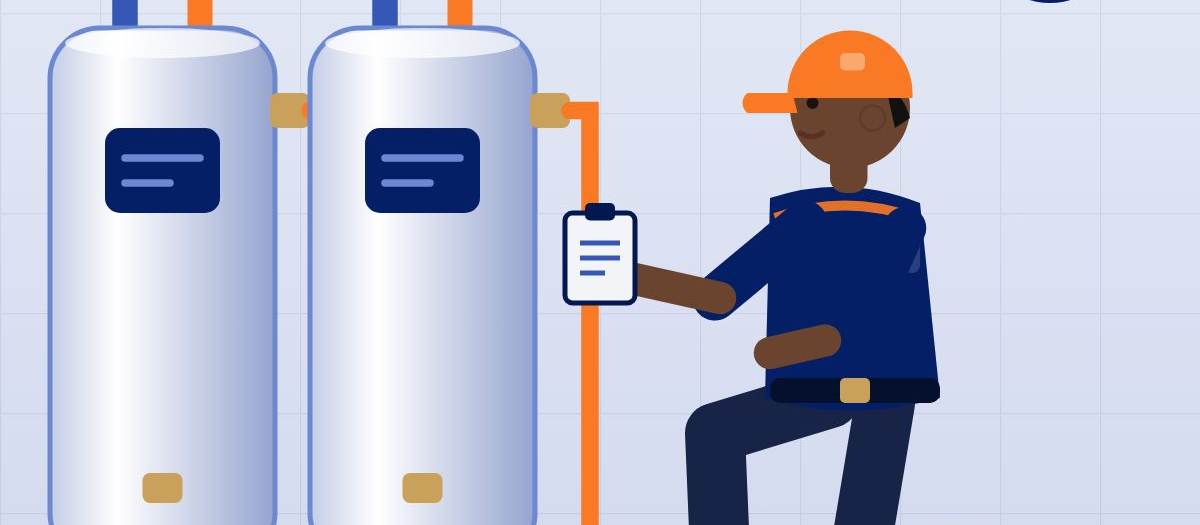
Most visits follow this order.
- Inspection. The technician checks the label, the age, the outside of the tank, the valves and the area underneath.
- Testing. The heat source is checked, and the anode rod and dip tube are inspected if symptoms point to them.
- Honest recommendation. You hear whether a repair will meaningfully extend the tank’s life or whether it is close to the end.
- Repair. Common jobs include a new anode rod, dip tube, thermostat or element, and a flush to clear sediment.
- Check and restart. The tank is refilled, checked for leaks and brought back to temperature.
What affects the cost of tank repairs?

| Factor | How it affects the price |
|---|---|
| Part being replaced | Dip tubes and anode rods are modest; gas controls cost more. |
| Seized fittings | An old, stuck anode rod takes extra time and tools to remove. |
| Sediment level | Heavy sediment can require a longer flush. |
| Tank size and fuel | Larger and gas units have different parts and labor. |
| Ceiling height and access | Replacing an anode rod needs overhead clearance. |
Repair the tank or replace it?
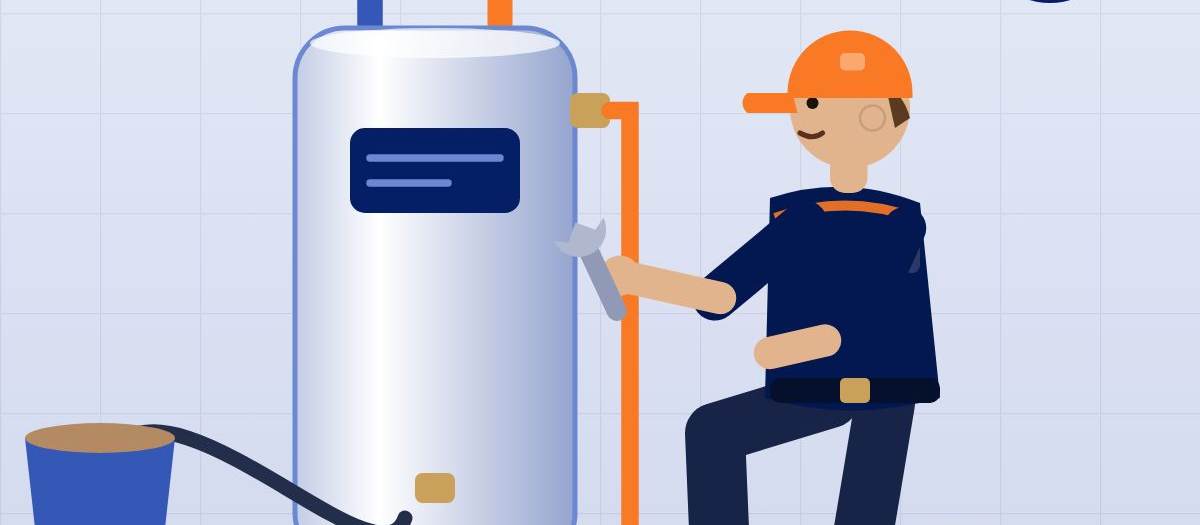
Repair is usually worth it when the tank is dry, reasonably young and the issue is a single part such as the anode rod or dip tube. Replacing an anode rod before the tank starts rusting is one of the best ways to extend its life.
Replacement makes more sense once the tank leaks, shows heavy rust inside or is well into its second decade. When that time comes, our guide to water heater replacement explains sizing and installation requirements.
Tank water heater questions
Why does my hot water smell like rotten eggs?
Usually it is a reaction between the anode rod and sulfate-reducing bacteria in the water, producing hydrogen sulfide gas. Swapping to a different type of anode rod and flushing the tank often clears it up.
How often should the anode rod be checked?
Every few years is a sensible rhythm, and more often in hard-water areas. Checking it before it is fully used up is what protects the tank.
Why is my water heater making popping noises?
Sediment on the bottom of the tank traps small pockets of water that boil and pop as the burner or element heats. A flush usually quiets it down.
Can a rusty water heater be fixed?
If the rust comes from a worn anode rod and the tank is not leaking, a new rod and a flush can help. If the tank itself is rusting through, replacement is the safe choice.
How long do tank water heaters last?
Many tank heaters last around 8 to 12 years. Hard water, high temperatures and no maintenance shorten that; regular flushing and anode rod checks can stretch it.
What temperature should my water heater be set to?
Around 120°F is a common recommendation for comfort, energy use and scald safety. Some households need higher settings for specific reasons, so ask the technician if you are unsure.