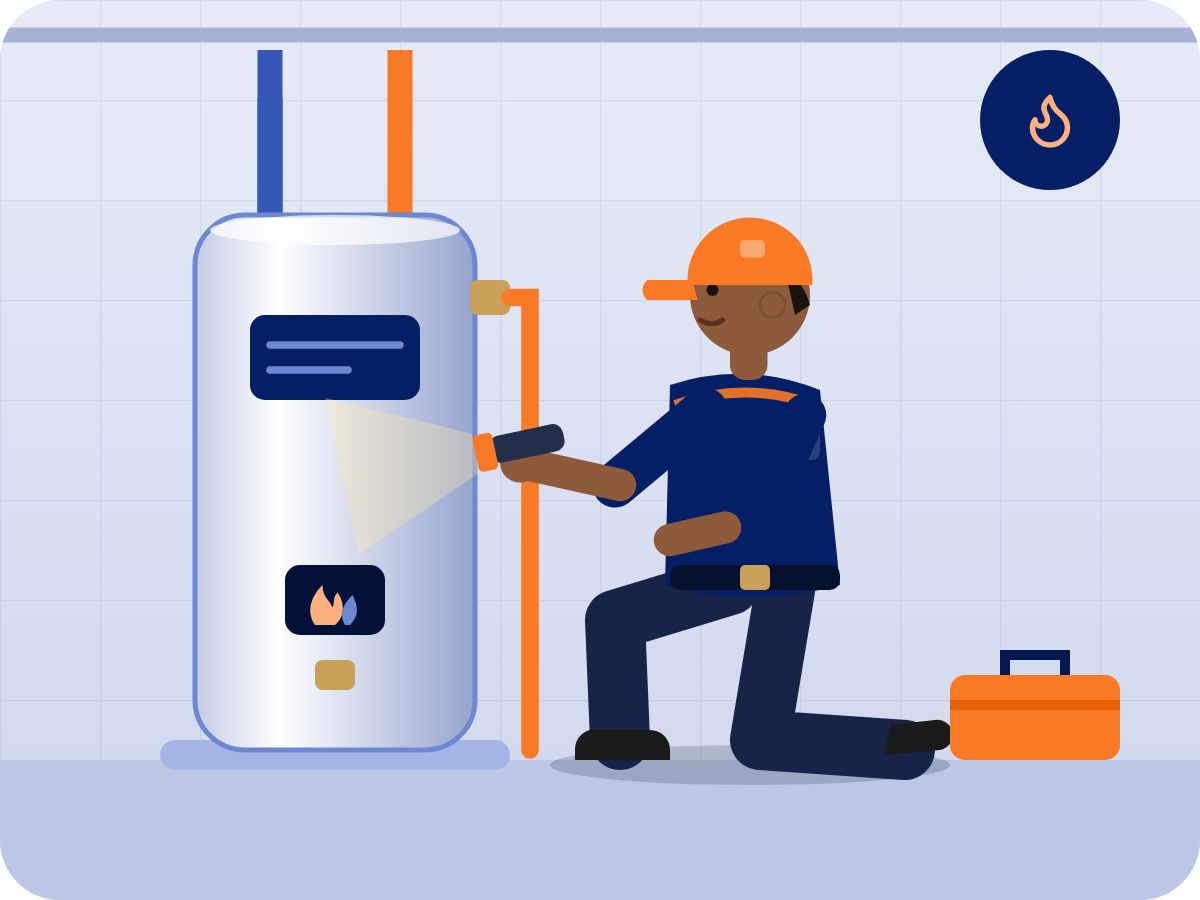
What does gas water heater repair cover?
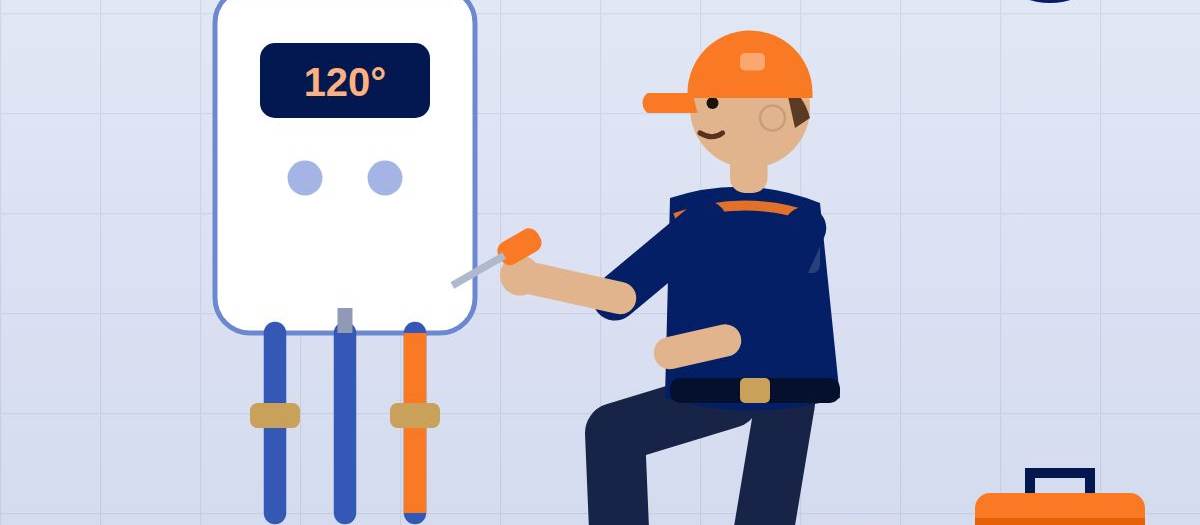
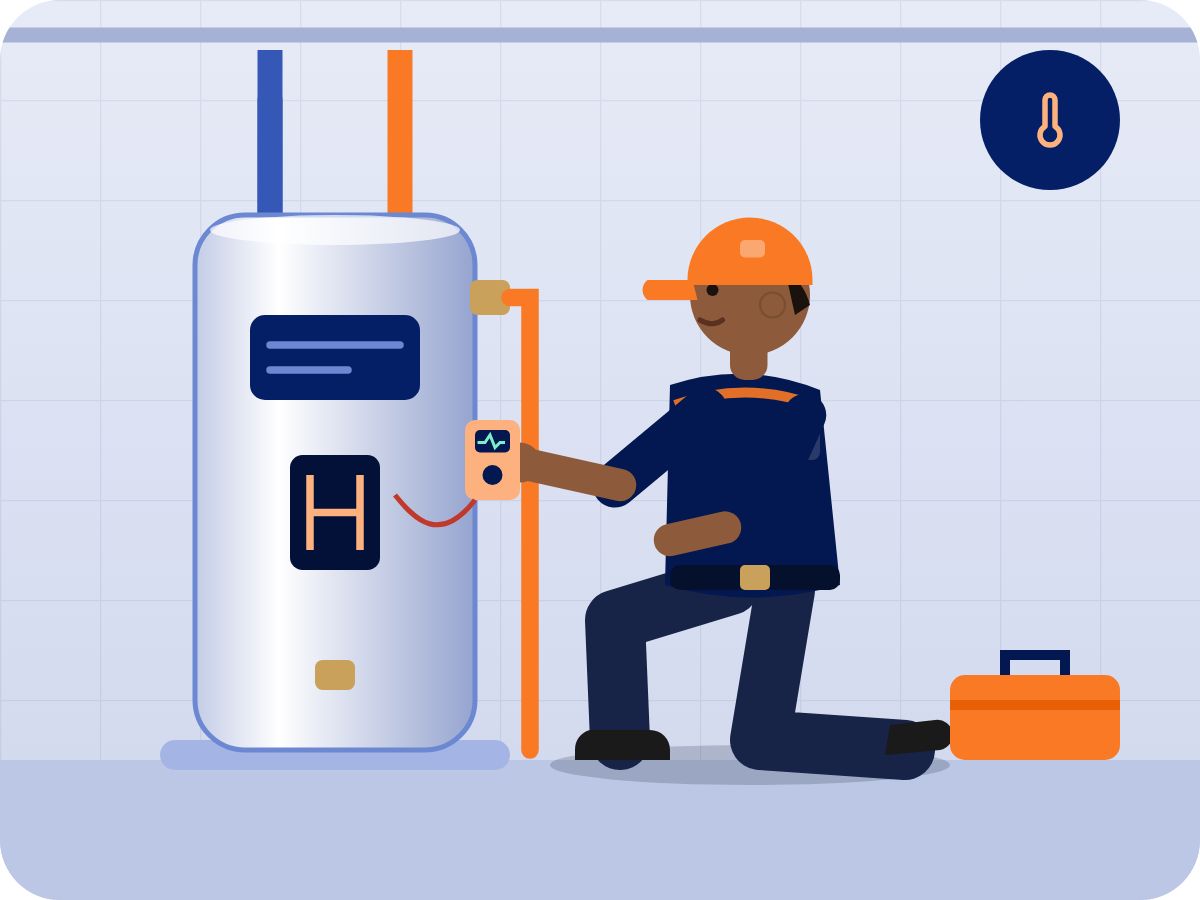
A gas water heater heats water with a burner under the tank and sends exhaust out through a vent. Repairs cover three areas: the ignition and safety parts that keep the flame going, the burner and gas control that deliver fuel, and the venting that carries combustion gases outside.
Because gas, flame and exhaust are involved, these repairs go beyond plumbing. A good technician checks how the heater burns and vents, not just whether it makes hot water. That is what keeps a gas heater both reliable and safe.
Gas heaters are common across Indiana, from older homes with basement units to newer houses with power-vented models in a garage or utility room.
Which parts of a gas water heater fail?

Pilot and thermocouple or flame sensor
On standing-pilot models, a small flame stays lit, and a thermocouple tells the gas control the flame is there. A dirty or worn thermocouple shuts off the gas even though the pilot looks fine. Newer models use a flame sensor and electronic igniter instead. Both are common, inexpensive repairs.
Burner
Dust, lint and debris can clog the burner, producing a weak, lazy or yellow flame. Cleaning restores a crisp blue flame and efficient heating.
Gas control valve
This unit combines the thermostat and gas valve. When it fails, the heater may not light, may not shut off or may heat erratically. It is replaced as a unit.
Venting and draft
Atmospheric heaters rely on natural draft up a vent. Power-vent models use a fan. Blocked, disconnected or poorly pitched vents can trigger safety shutoffs and must be corrected.
Flammable vapor sensor
Many modern gas heaters include a sensor that shuts the heater down if it detects vapors. Once tripped, some require part replacement before the heater will run again.
Standard, power-vent and direct-vent gas heaters

Not every gas water heater works the same way, and the type changes what can go wrong.
Atmospheric (standard) vent heaters rely on warm exhaust rising naturally up a metal vent and chimney. They have few electrical parts, but they depend on good draft and a correctly sized, properly pitched vent.
Power-vent heaters use a fan on top of the tank to push exhaust out through plastic pipe, often through a side wall. They need electricity, and fan motors, pressure switches and control boards are common repair points.
Direct-vent heaters draw combustion air from outside and exhaust back out through a sealed system. They are less affected by indoor drafts but need clear intake and exhaust terminals, especially after heavy snow.
Knowing which type you have, usually printed on the label, helps the technician bring the right parts.
8 signs your gas water heater needs service

Gas heaters usually give clear warnings before they quit.
- The pilot keeps going out. Often a thermocouple, flame sensor or draft problem.
- A yellow or flickering burner flame. A clean burner should burn mostly blue.
- Soot or scorch marks near the burner. A sign of poor combustion or venting.
- Water too hot or not hot enough. The thermostat or gas control may be failing.
- Clicking with no ignition. An electronic igniter or sensor issue on newer models.
- A smell of exhaust near the heater. Venting may not be drawing properly.
- Rust on the vent connector. Condensation or backdrafting may be at work.
- Rumbling while the burner runs. Sediment is overheating the tank floor.
What causes gas water heater problems?

- Dirty combustion air. Lint, dust and pet hair near the heater get pulled into the burner.
- Drafts. Open doors, fans or a poorly sealed combustion chamber can blow out a pilot.
- Worn safety parts. Thermocouples and sensors wear with years of heat.
- Venting issues. Disconnected sections, poor pitch or blockages cause backdrafting and shutoffs.
- Sediment. Hard water leaves a layer on the tank floor right above the burner, which makes heating slower and noisier.
Safe steps before you call

Gas work belongs with a technician, but a few checks are fine.
- Check for a gas smell first. If you smell gas, stop and leave the house.
- Look through the sight window. See whether the pilot or burner is lit.
- Relight once using the label. Follow the manufacturer's instructions on the heater exactly, one time only.
- Check other gas appliances. If the stove or furnace also has no gas, the issue is supply.
- Clear the area. Remove stored items, laundry or chemicals from around the heater.
Smell gas? Leave immediately, avoid switches and phones indoors and call your gas utility or 911 from outside.
Carbon monoxide alarms matter. A working CO alarm near sleeping areas is an inexpensive safeguard in any home with gas appliances.
What happens during a gas water heater service visit?

Expect the technician to look at the whole system.
- Safety check. Gas connections and the area around the heater are checked for leaks and hazards.
- Combustion check. The pilot or igniter, burner and flame are inspected.
- Venting check. The vent connector and draft are tested to make sure exhaust leaves properly.
- Diagnosis and quote. You hear which part failed and the cost before work starts.
- Repair and confirm. The part is replaced and the heater runs through a full cycle.
If the heater lights but water still runs cold, the overlap with our no hot water repair guide may help narrow the cause.
What affects the cost of a gas water heater repair?

| Factor | How it affects the price |
|---|---|
| Failed part | Thermocouples and burner cleaning cost less than a gas control valve. |
| Ignition type | Electronic ignition and power-vent models use pricier parts. |
| Venting corrections | Re-pitching or replacing vent sections adds labor and materials. |
| Age of the heater | Older units may need several parts, which changes the repair-or-replace math. |
When is a gas heater better replaced?

If the tank is leaking, rusting inside or well past its expected life, putting a new gas control into it rarely makes sense. The same applies when venting must be rebuilt anyway. In those cases, compare the repair quote with a new unit on our replacement and installation page, which also explains when switching to tankless or a heat pump is worth considering.
For homes with a gas tankless heater, ignition and venting issues look similar, but descaling and flow sensors also come into play.
Gas water heater questions
Why does my water heater pilot keep going out?
The most common causes are a dirty or worn thermocouple, a draft blowing it out, a dirty pilot tube or a venting problem. If relighting once does not fix it, call for service.
Is it safe to relight a water heater pilot myself?
Following the instructions on the heater label once is generally fine if you do not smell gas. If it will not stay lit or you are unsure, leave it to a technician.
Why is my water heater burner flame yellow?
A yellow, lazy flame usually means incomplete combustion from a dirty burner or poor air supply. It should be cleaned and checked.
How do I know if my water heater is venting properly?
Signs of trouble include soot, rust on the vent, an exhaust smell or a heater that shuts itself off. A technician can test the draft.
Do gas water heaters need maintenance?
Yes. A yearly check of the burner, venting and relief valve, plus flushing sediment, keeps a gas heater safe and efficient.
Can a gas water heater be repaired the same day?
Many common parts such as thermocouples are repaired in one visit. Specific gas controls may need to be ordered.