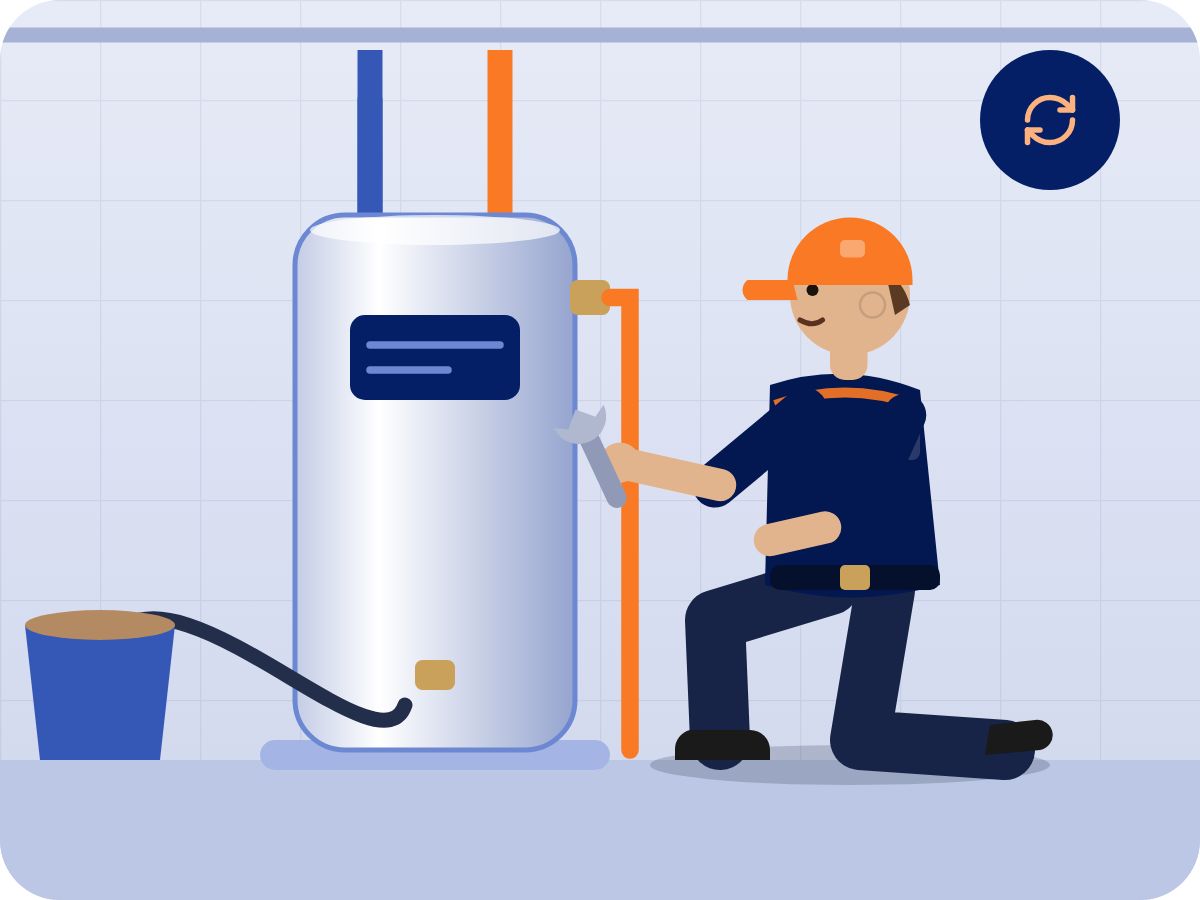
What is water heater flushing and maintenance?
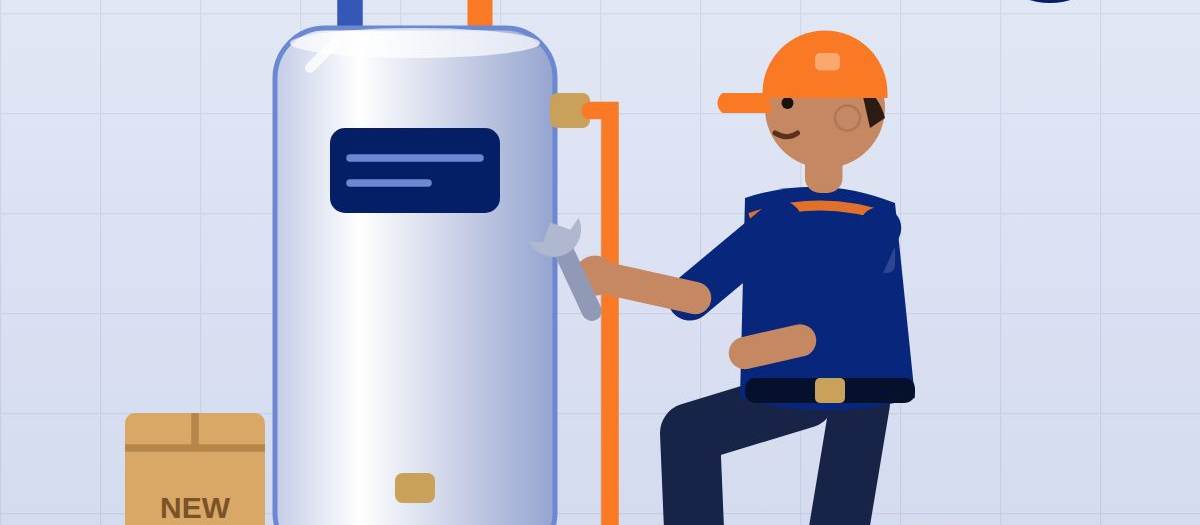
Flushing drains water out of a tank heater along with the mineral sediment that settles on the bottom. A full maintenance visit goes further: it checks the anode rod that protects the tank, tests the relief valve, looks over the heat source and venting, and inspects fittings for early leaks. For tankless units, maintenance means descaling the heat exchanger and cleaning the inlet filter.
It is the least dramatic water heater service, and the one that prevents the most dramatic failures. Most leaks, noisy tanks and early burnouts trace back to sediment, scale or a spent anode rod that nobody checked.
Why maintenance matters with Indiana water
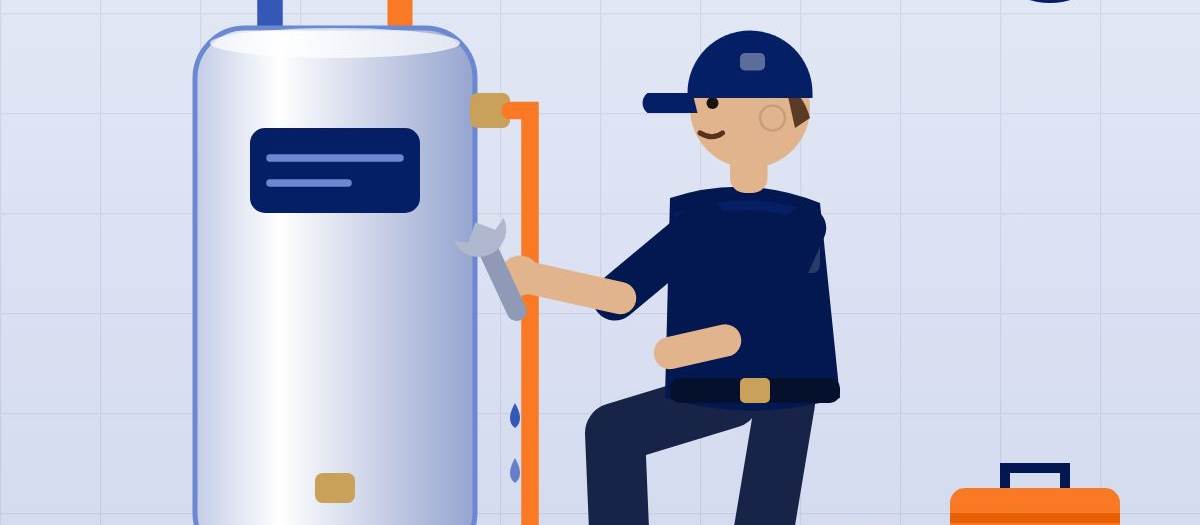
Much of Indiana has hard water, rich in calcium and magnesium. When that water is heated, minerals drop out. In a tank they form a layer of sediment on the bottom; in a tankless unit they coat the inside of the heat exchanger.
Sediment acts like insulation between the burner or element and the water. The heater runs longer, uses more energy and overheats the steel at the bottom of the tank. On electric units, the lower element can end up buried. On tankless units, scale raises internal temperatures and triggers error codes or leaks.
Homes with a water softener build up much less scale, but they can use up anode rods faster, so the anode still needs checking.
What a maintenance visit includes
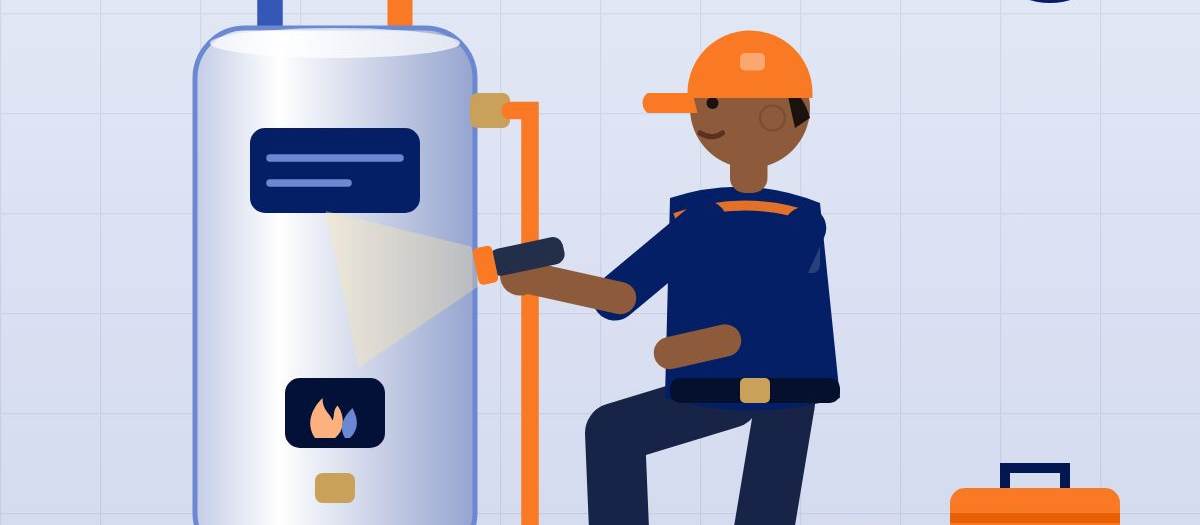
For tank water heaters
- Draining and flushing sediment until the water runs clear.
- Inspecting the anode rod and replacing it if it is mostly consumed.
- Testing the temperature and pressure relief valve.
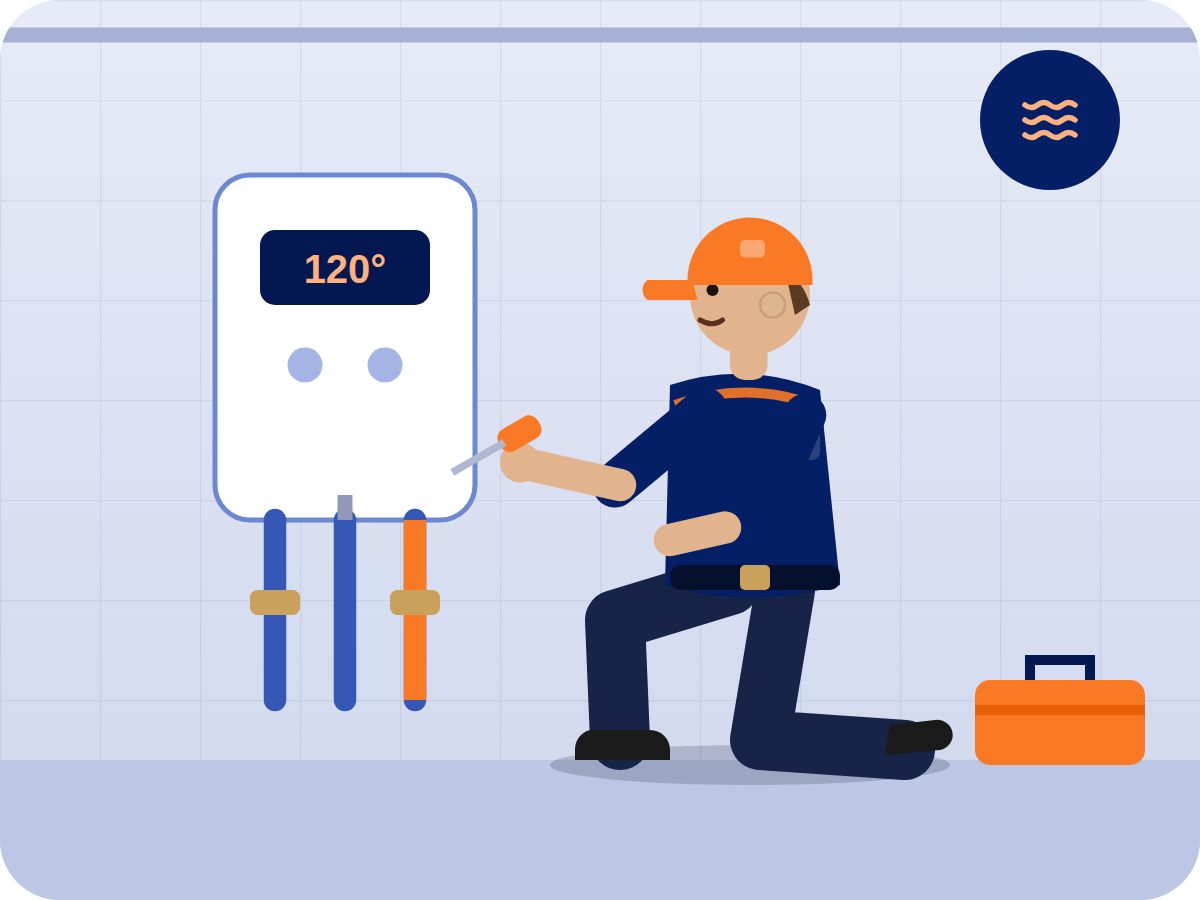
- Checking the thermostat setting.
- On gas units, inspecting the burner, pilot or igniter, and venting.
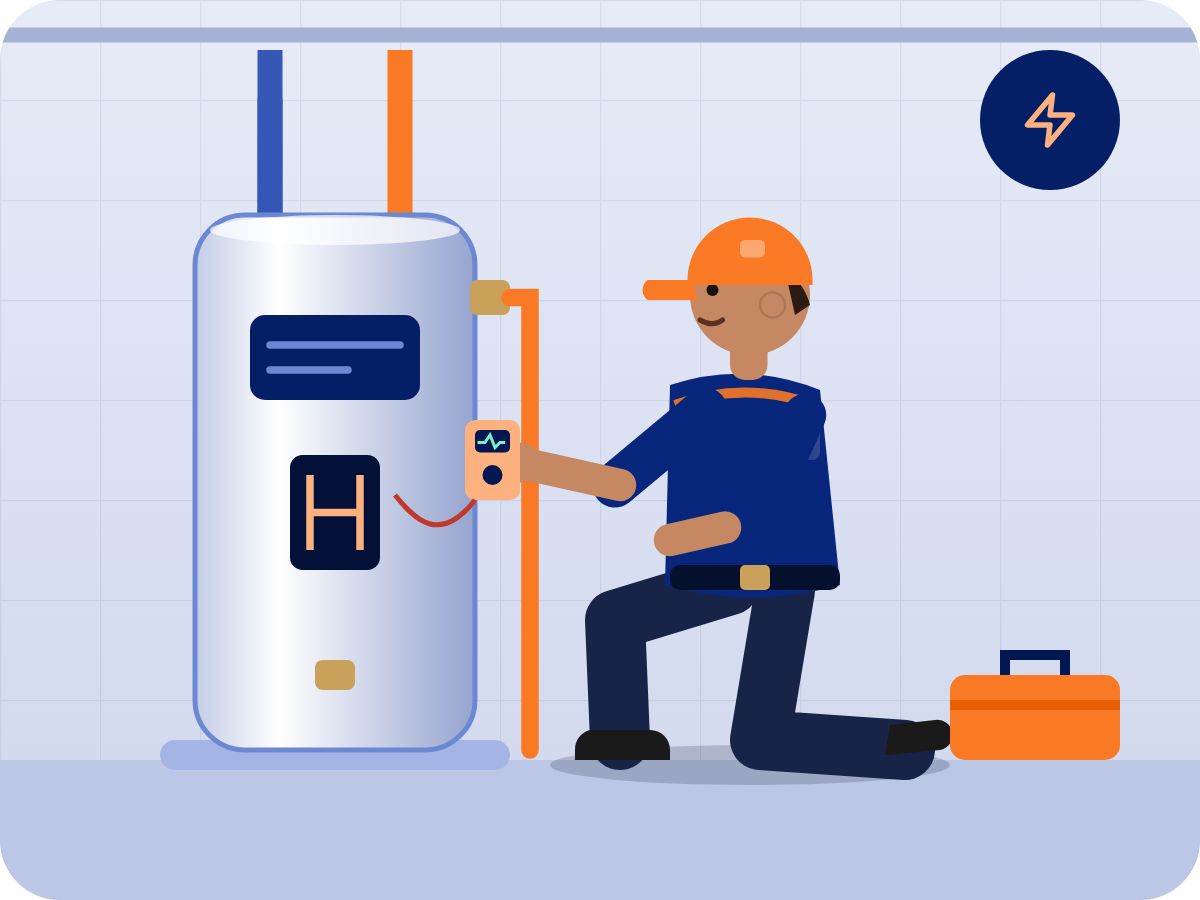
- On electric units, checking element terminals for heat damage.
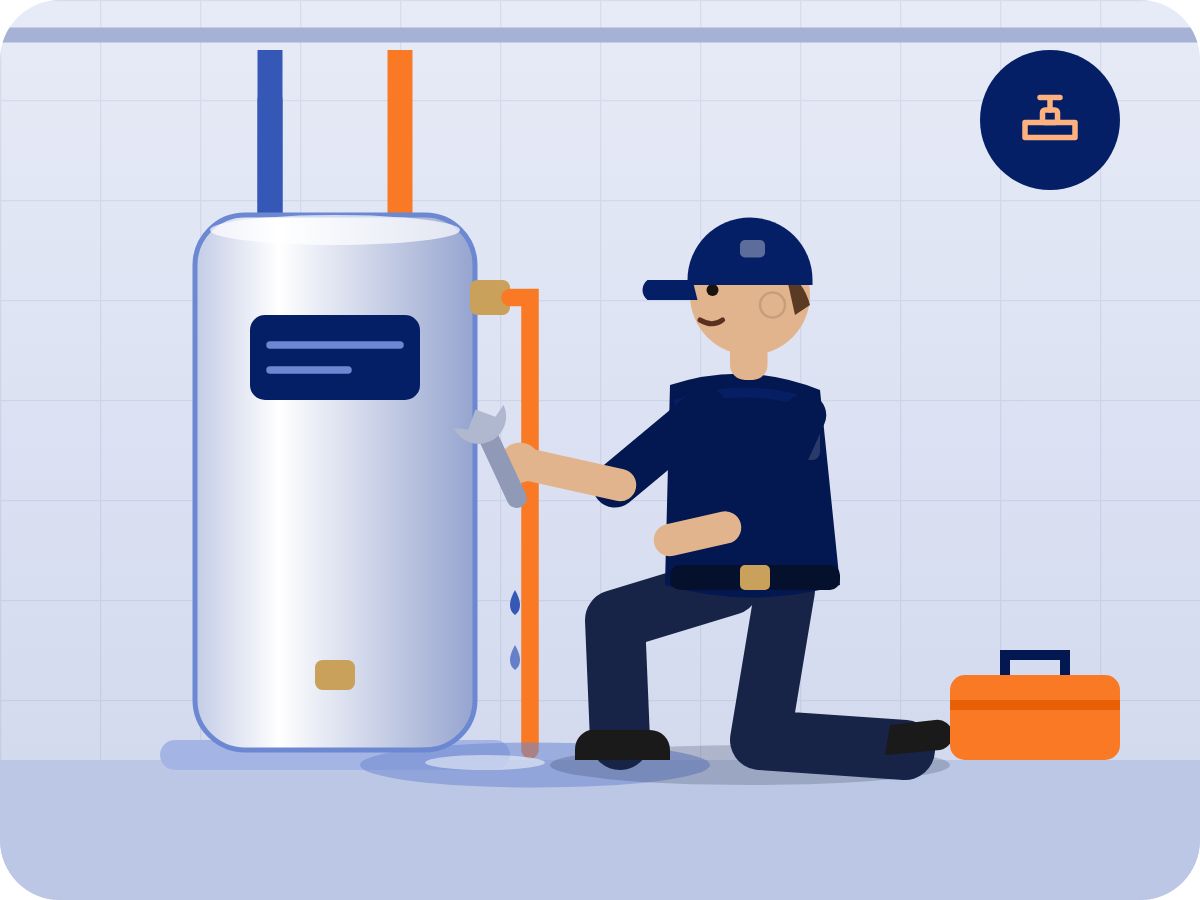
- Looking at fittings, the drain valve and the pan for signs of leaks.
For tankless water heaters
- Descaling the heat exchanger with a pump and cleaning solution through the isolation valves.
- Cleaning the cold-water inlet filter.
- Checking the condensate line and neutralizer on condensing models.
- Reviewing error history and venting.
Units with isolation valves are much easier to service. If yours has none, adding them is a common upgrade; see tankless water heater leak repair for why.
8 signs your water heater is overdue for maintenance
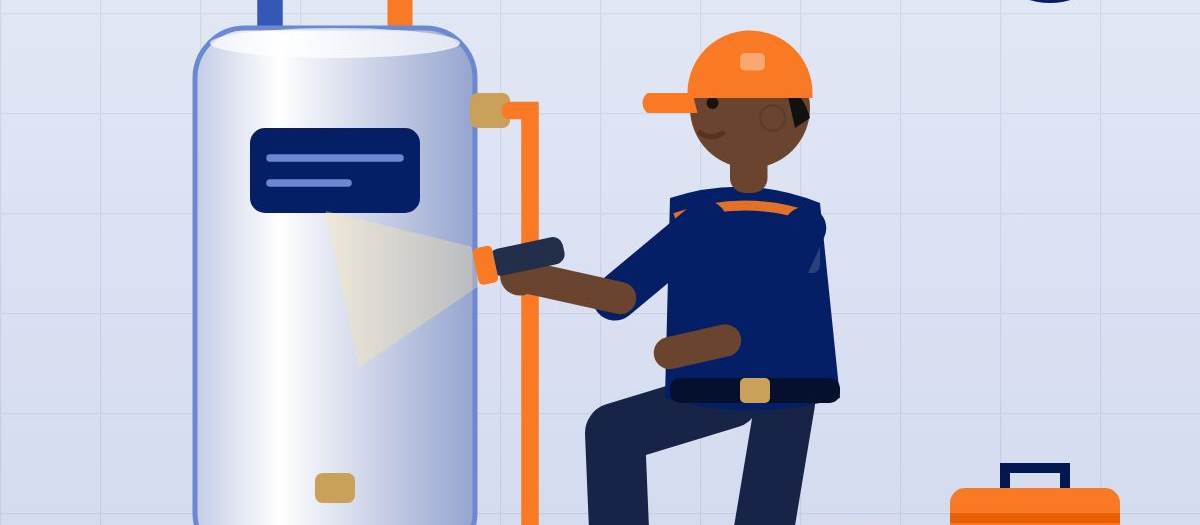
Any of these suggest it has been too long.
- Rumbling or popping while heating. Sediment on the tank floor is boiling in pockets.
- Hot water runs out sooner. Sediment takes up space and slows recovery.
- Cloudy or gritty hot water. Loose sediment is reaching your taps.
- Rotten-egg smell. Often linked to the anode rod and bacteria.
- Higher energy bills. The heater is working harder through a mineral layer.
- Tankless error codes about temperature or flow. Scale is restricting the heat exchanger.
- A relief valve that drips. Worth testing as part of a service.
- No service in several years. Even a quiet heater benefits from a check.
How often should you flush or descale?
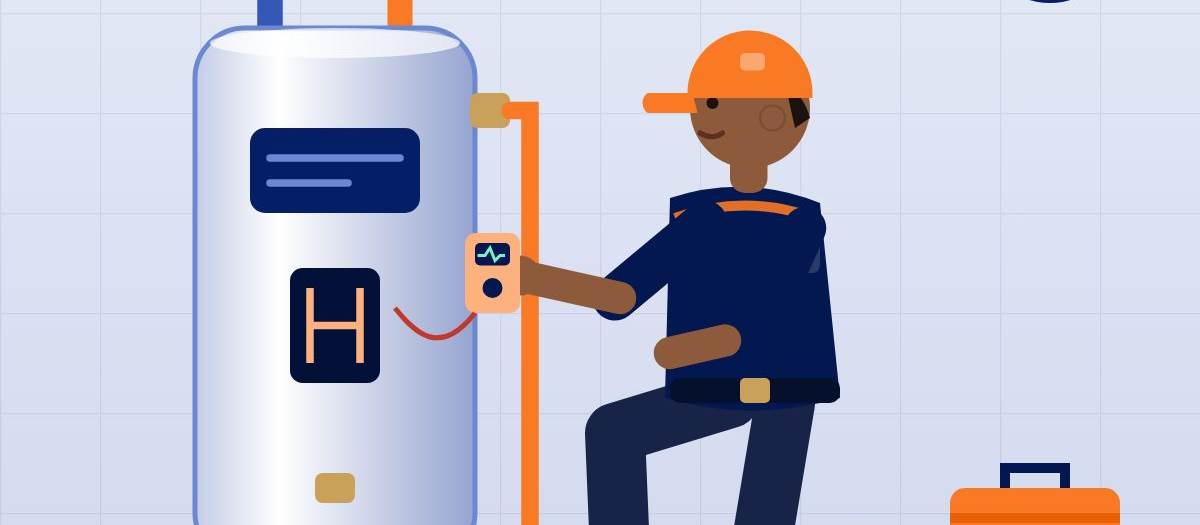
| Situation | Typical schedule |
|---|---|
| Tank heater, hard water, no softener | Flush at least once a year |
| Tank heater with a water softener | Flush every one to two years; check the anode more often |
| Tankless heater, hard water | Descale at least once a year |
| Large family or heavy use | Consider more frequent service |
| Commercial equipment | Often once or twice a year or more, set by the provider |
These are common guidelines, not rules. Your water, usage and the manufacturer’s instructions all matter. Businesses should also see our commercial water heater page for planning advice.
Can you flush a water heater yourself?
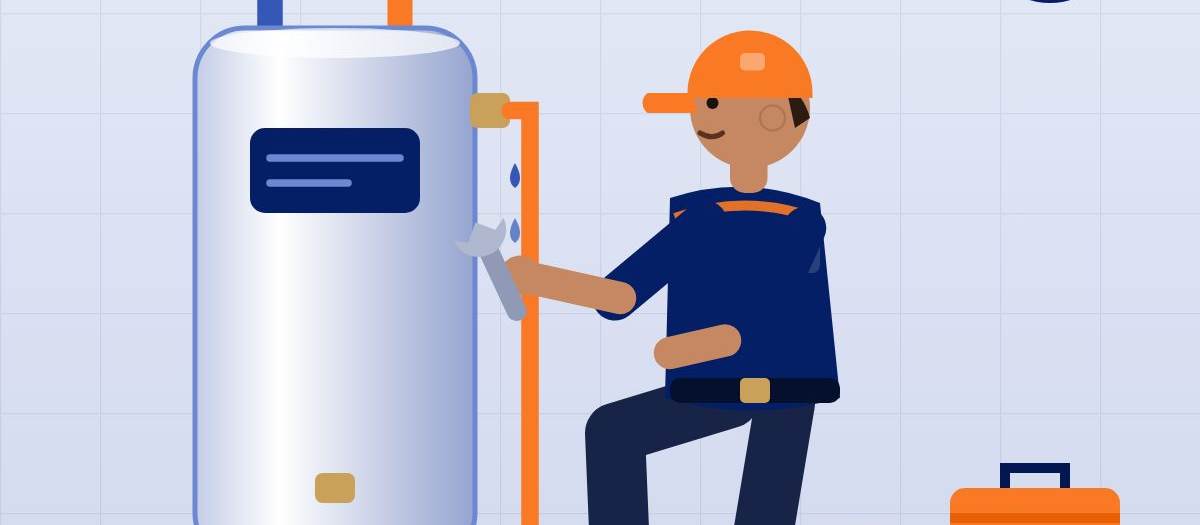
Some homeowners do, and it is a reasonable job for a careful person with a newer heater. The basic idea is simple: turn off the power or set gas to pilot, close the cold supply, attach a hose to the drain valve, open a hot tap and drain until the water runs clear.
There are real risks, though. Tank water is hot enough to scald. Old plastic drain valves can crack or refuse to close. An electric heater powered on before it is full will burn out its elements. And a tank that has never been flushed may have so much sediment that the drain clogs.
If the heater is older and has never been flushed, consider leaving the first flush to a technician. Disturbing years of sediment can expose weak spots or leave a drain valve leaking.
Refill before power. Always let the tank fill completely, with a hot tap running until water flows, before restoring power or turning gas back on.
Upgrades that make maintenance easier
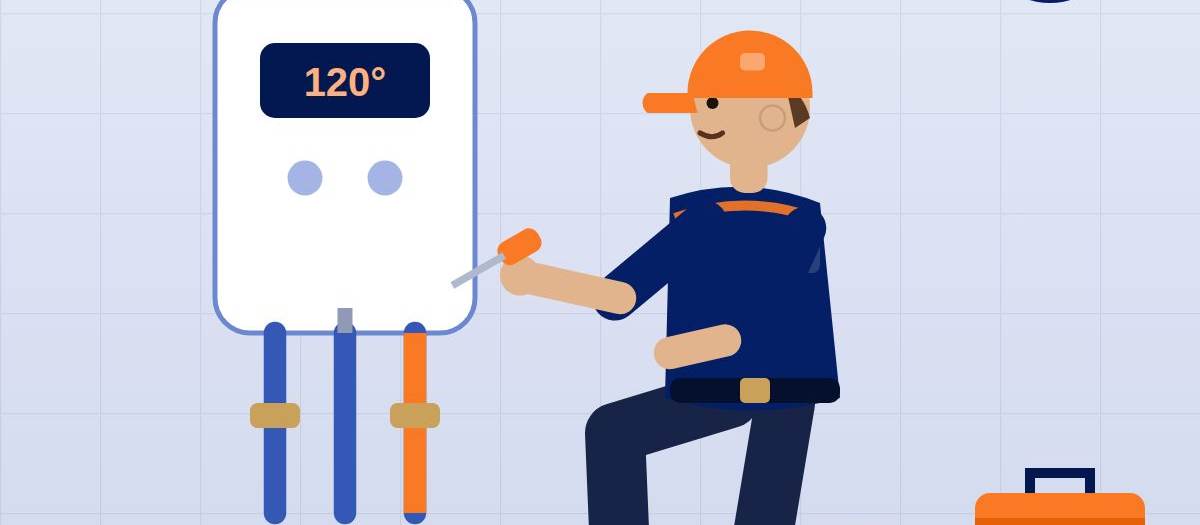
A few small additions can cut down on sediment, scale and service time for years to come.
- A full-port brass drain valve. It flushes faster than a plastic valve and is far less likely to crack or drip.
- Isolation valves on tankless units. They let a technician descale in minutes without cutting into pipes.
- A water softener or scale-control system. Reduces mineral buildup throughout the house, though anode rods then need checking more often.
- A thermal expansion tank. Takes stress off the relief valve in closed plumbing systems.
- A drain pan. Catches small leaks before they reach the floor and gives early warning.
Your provider can tell you which of these make sense for your heater, water and home.
What happens during a maintenance visit?
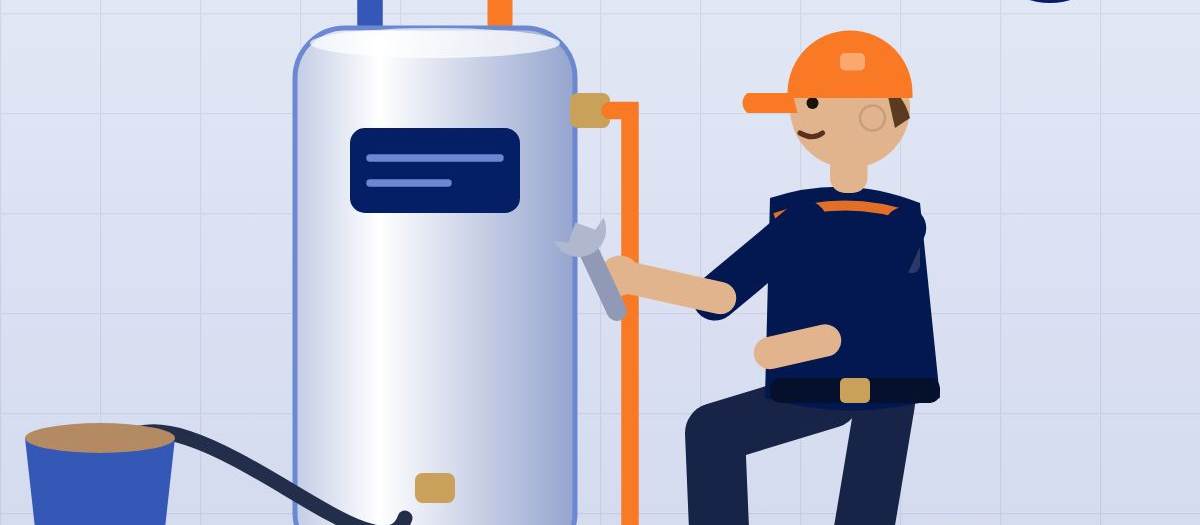
A typical visit looks like this.
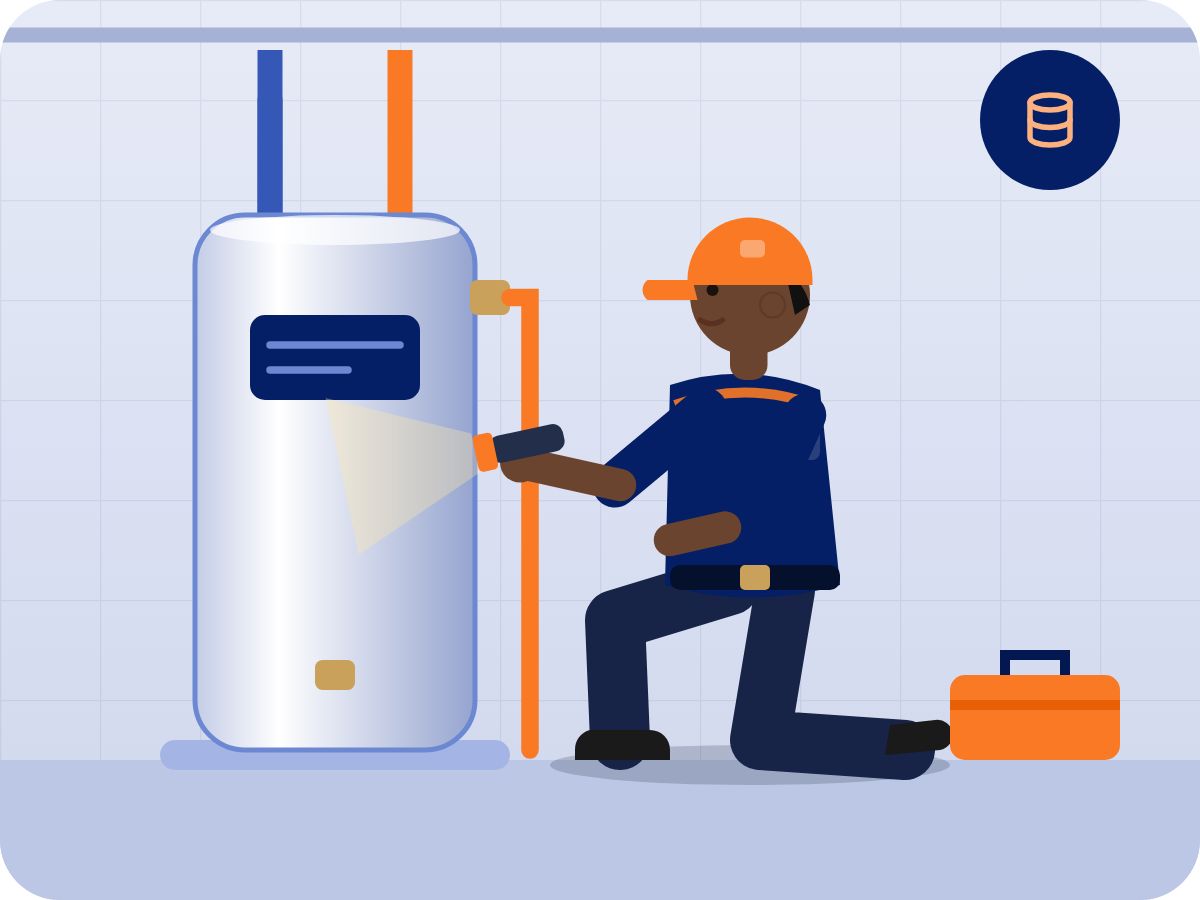
- Pre-check. The heater is inspected for leaks, corrosion and venting issues before anything is opened.
- Shut down safely. Power or gas is turned down and the cold supply closed.
- Flush or descale. Sediment is flushed from tanks; tankless units are descaled through the service ports.
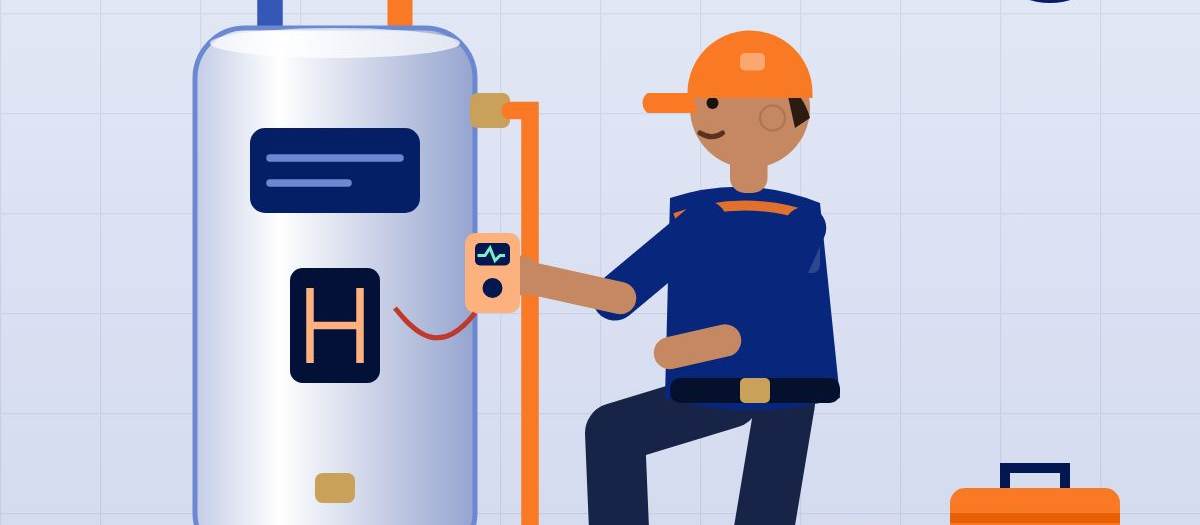
- Inspect parts. The anode rod, relief valve and heat source are checked.
- Refill, restart and report. The heater is refilled, restarted and you get a summary of its condition.
What affects the cost of maintenance?
| Factor | How it affects the price |
|---|---|
| Tank or tankless | Descaling uses a pump and solution; tank flushes are simpler. |
| Sediment level | Heavily sedimented tanks take longer to flush. |
| Parts found worn | A new anode rod, drain valve or relief valve adds to the visit. |
| Valve upgrades | Adding isolation valves to a tankless unit is a one-time cost. |
Maintenance questions
How do I know if my water heater needs flushing?
Rumbling or popping, hot water that runs out sooner, gritty water or no service in a year or more are all good reasons.
Does flushing really extend a water heater's life?
It helps. Removing sediment reduces overheating at the bottom of the tank, and checking the anode rod during service protects the steel.
Can flushing an old water heater cause a leak?
Occasionally. Heavy sediment can mask weak spots, and old drain valves can fail. That is why a technician is a good choice for older, never-flushed tanks.
What is an anode rod and why check it?
It is a metal rod that corrodes so the tank does not. Once it is used up, the tank starts to rust from the inside. Our tank water heater repair page explains more.
How long does a flush or descale take?
Most maintenance visits take one to two hours, depending on sediment and the type of heater.
Should I flush my water heater if it is still under warranty?
Yes. Many manufacturers recommend regular flushing in their instructions, and keeping records of maintenance can help if you ever need to make a warranty claim. Check your owner’s manual for the specific schedule your heater calls for.
Is maintenance different for gas and electric heaters?
Flushing is the same, but gas units also need burner and venting checks, while electric units need element and wiring checks.